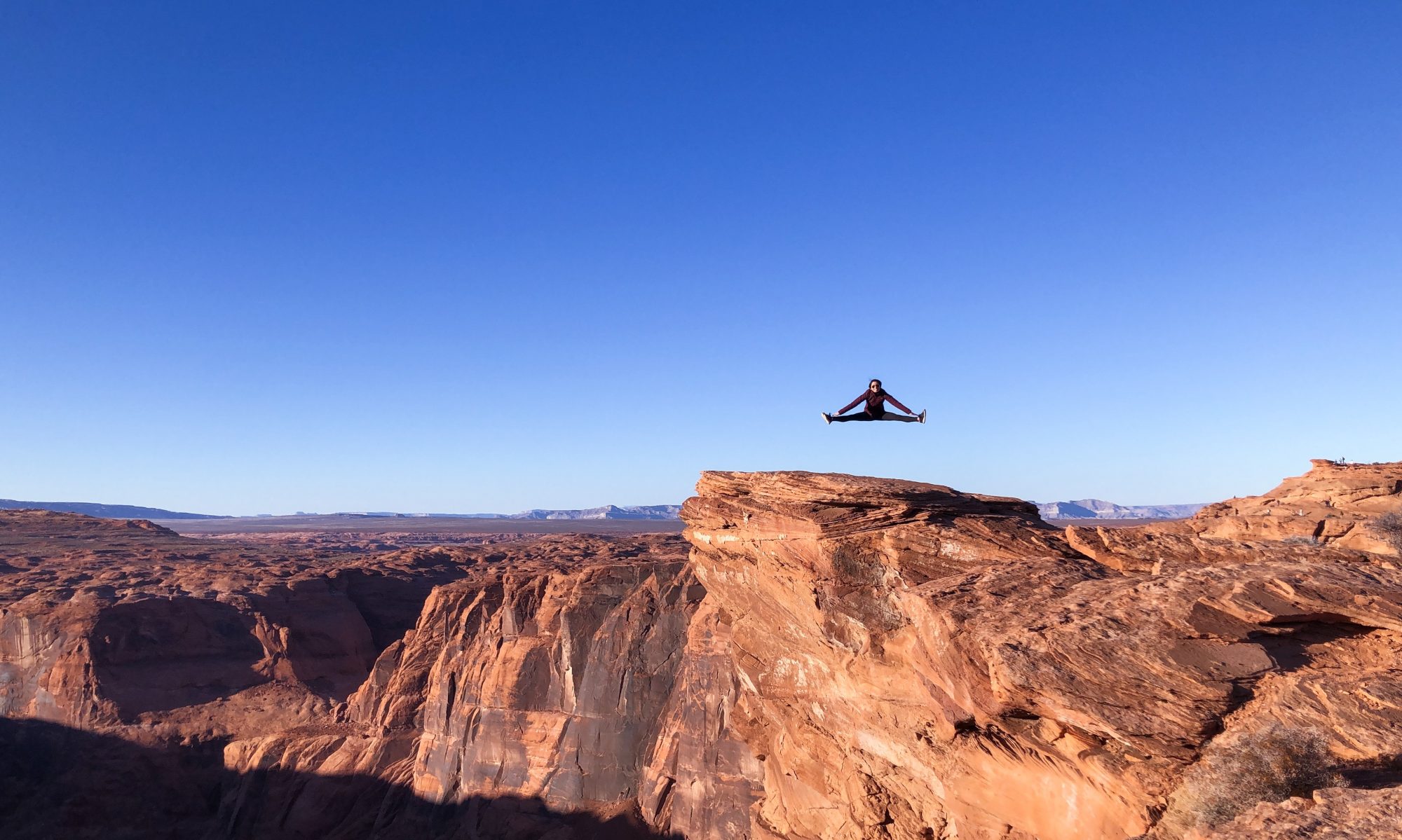
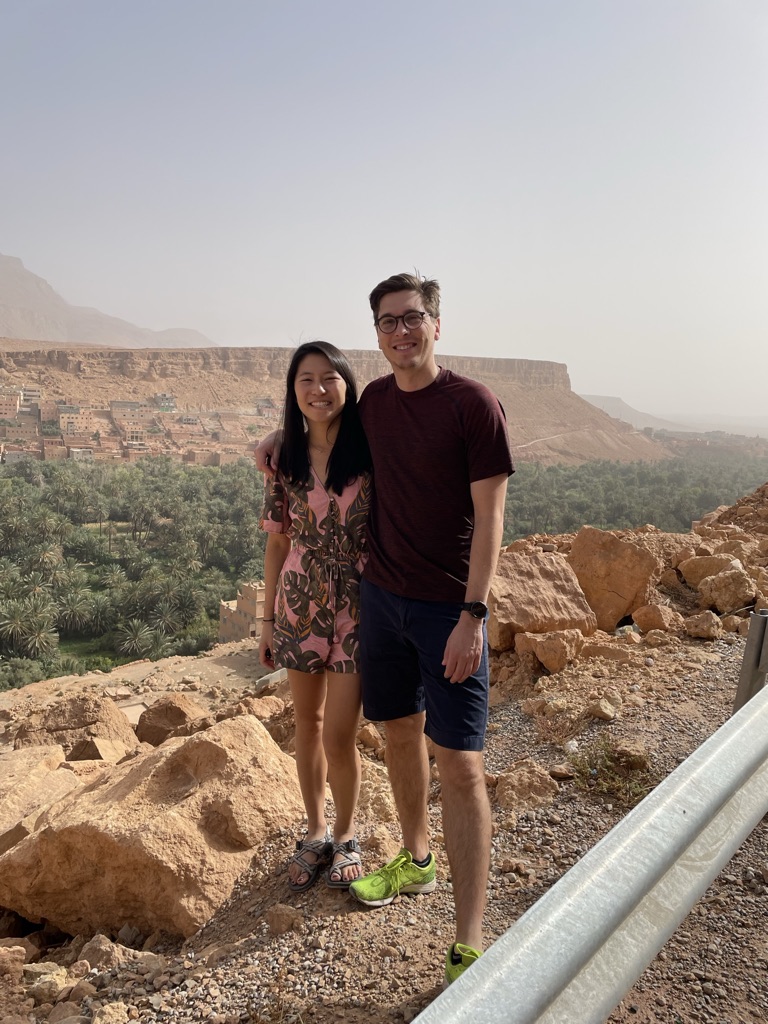
Tedd and I haven’t gone on a real international vacation together since Covid, so for our first trip out of the country we picked Morocco – Tedd had been wanting to go to a Moroccan surf camp since reading an article about it a few years back, and I mostly wanted to go because Anna Delvey went and it looked cool on Instagram.
We found pretty reasonable roundtrip flights to Casablanca, and October seemed like a good time to go (with more temperate weather and fewer crowds), so set off on an adventurous (and also tiring) 10-day roadtrip around Morocco with the goal of doing some surfing, climbing, and going out to the Sahara Desert.
This is our attempt to document our trip both because we want to remember it and because friends have asked about our trip, so here goes…
Summary of Itinerary
| Day | Highlights | Overnight/Lodging |
|---|---|---|
| Day 1 | Arrive in Casablanca, Drive to Fes | Fes (Riad Laaroussa) |
| Day 2 | Explore Fes | Fes (Riad Laaroussa) |
| Day 3 | Drive to the Sahara Desert | Erg Chebbi (Desert Camp) |
| Day 4 | Climbing in Todra Gorge | Todra Gorge (A Secret Garden) |
| Day 5 | Drive to Marrakech | Marrakech (Riad Yasmine) |
| Day 6 | Explore Marrakech | Marrakech (Riad Yasmine) |
| Day 7 | Drive to Taghazout | Taghazout (Munga Guesthouse) |
| Day 8 | Surfing in Taghazout | Taghazout (Munga Guesthouse) |
| Day 9 | Casablanca | Casablanca (Four Seasons) |
| Day 10 | Goodbye! |
Day 1: Fes
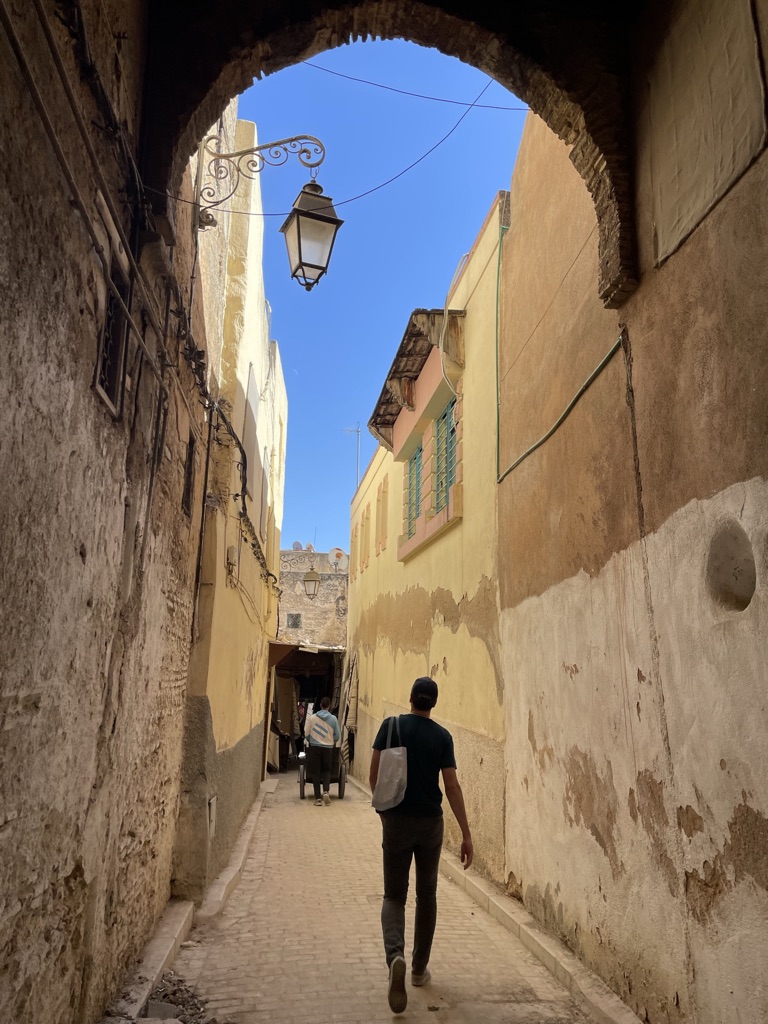
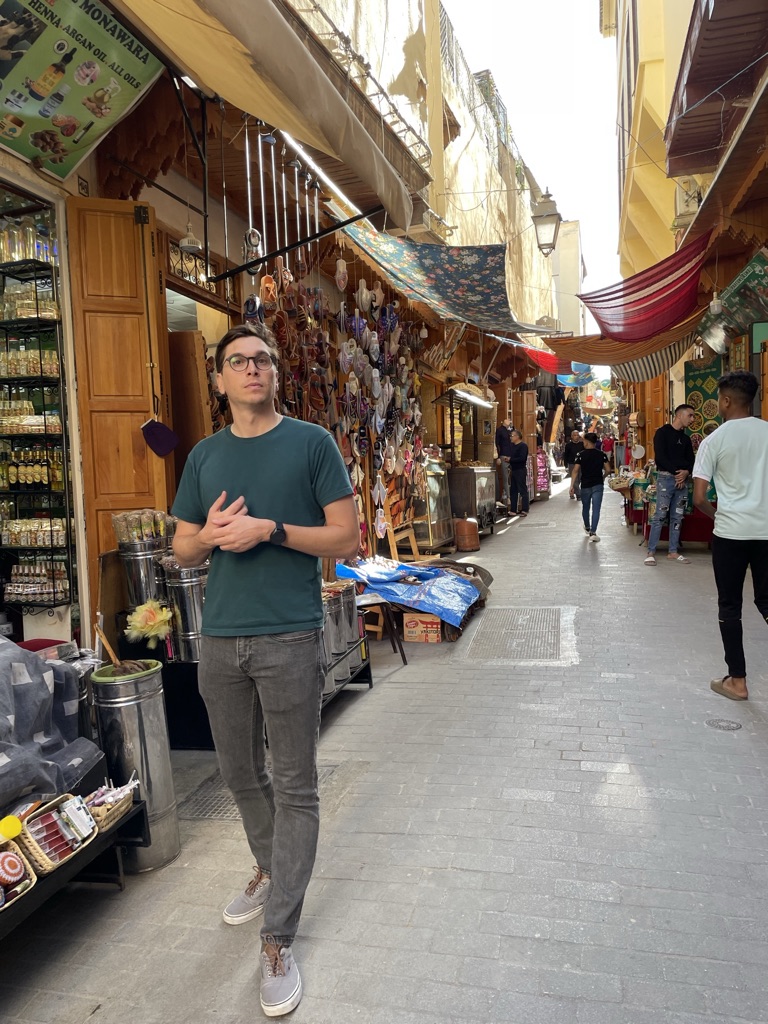
We landed in Casablanca early in the morning off a red eye, picked up our rental car at the airport, and immediately set off on the ~3 hour drive to Fes. Our plan was to stop in Meknes (which was an hour away from Fes) for lunch, but after Google Maps had us drive straight through the heart of the medina (which is the market in the busiest part of Moroccan towns, usually narrow and crowded with people), getting our car stuck in the gridlock of shoppers, and having to be bailed out by a random nice man on the street, we gave up that plan altogether and just drove straight to Fes.
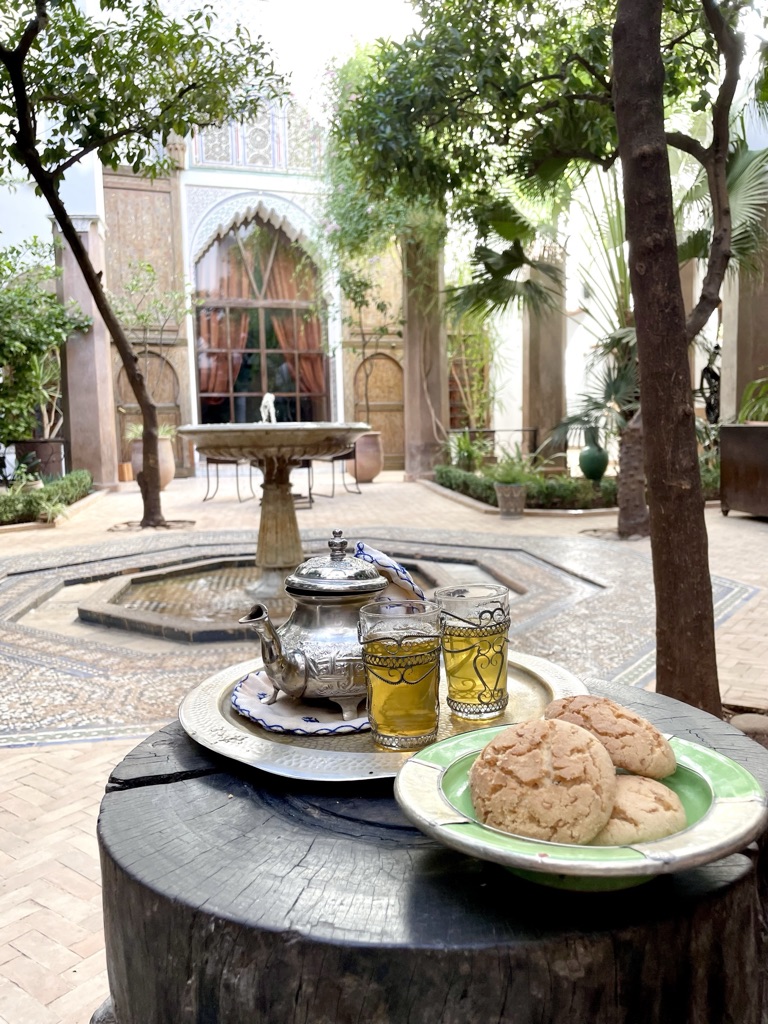
Luckily we arrived and were greeted by our luggage porter (in a parking lot, outside the medina this time!) and escorted to Riad Laaroussa, where we were staying. There, we settled in with some cookies and mint tea (which we were greeted with at every riad we stayed in) and hung out in the shade of the courtyard.
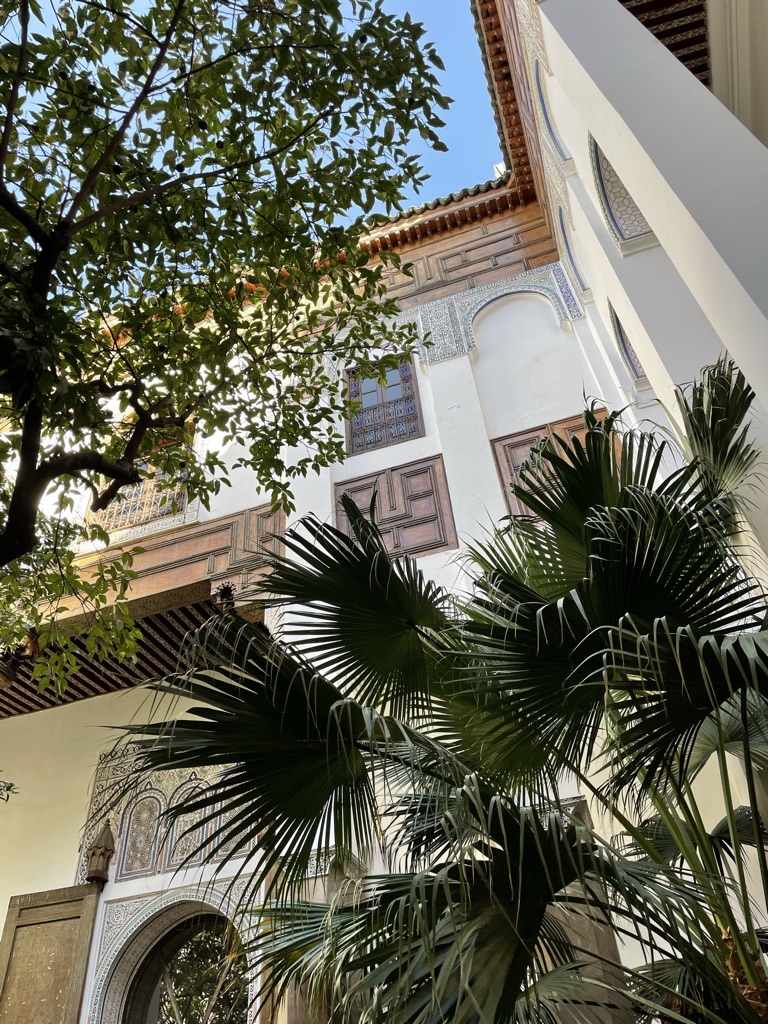
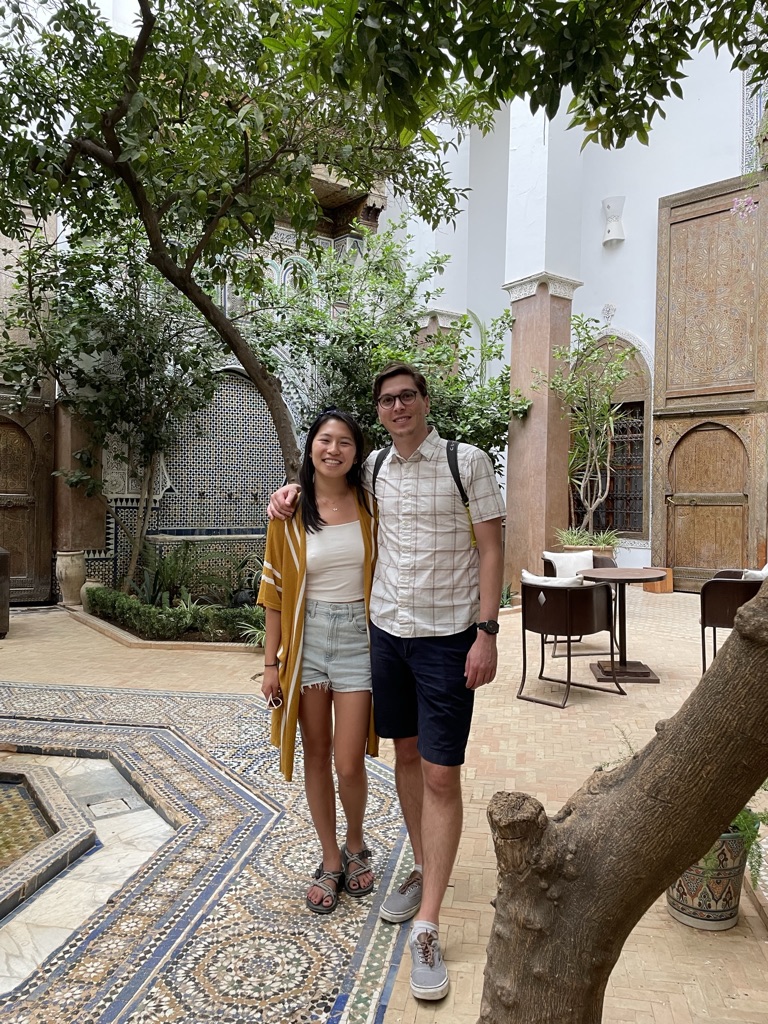
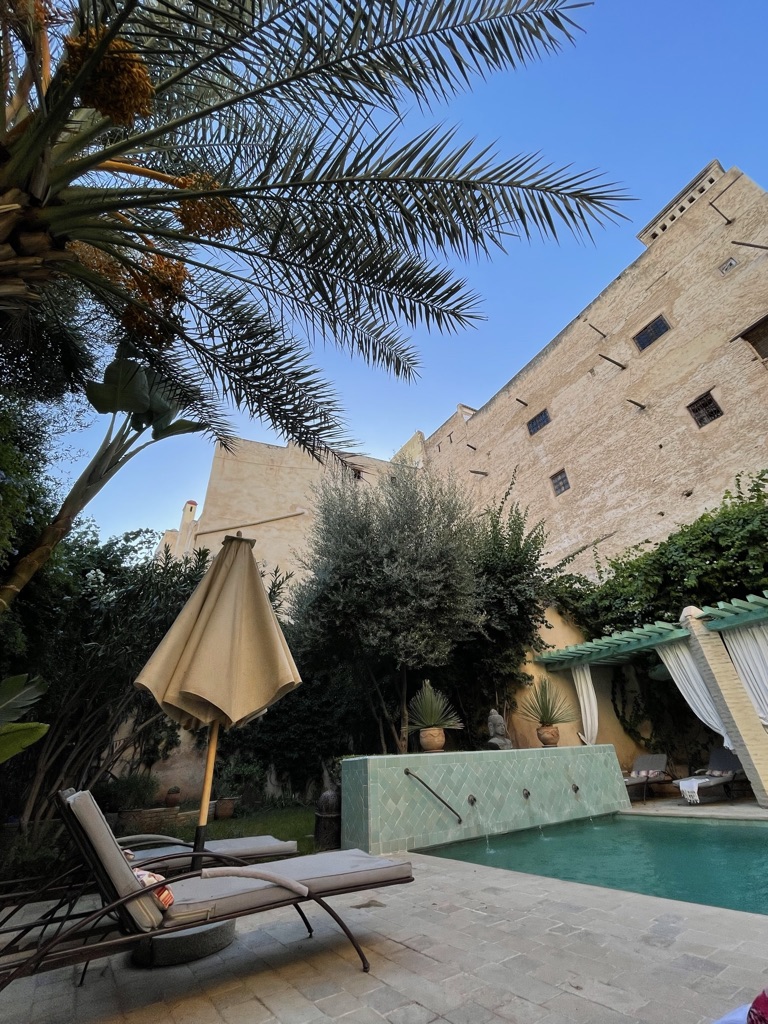
After settling into our room, we ventured out into the winding maze of the medina in search of some food because, per usual, Tedd was starving and we ended up getting a chickpea sandwich off a street cart and some freshly squeezed orange juice before heading back to the riad and hanging out by the pool for the rest of the afternoon.
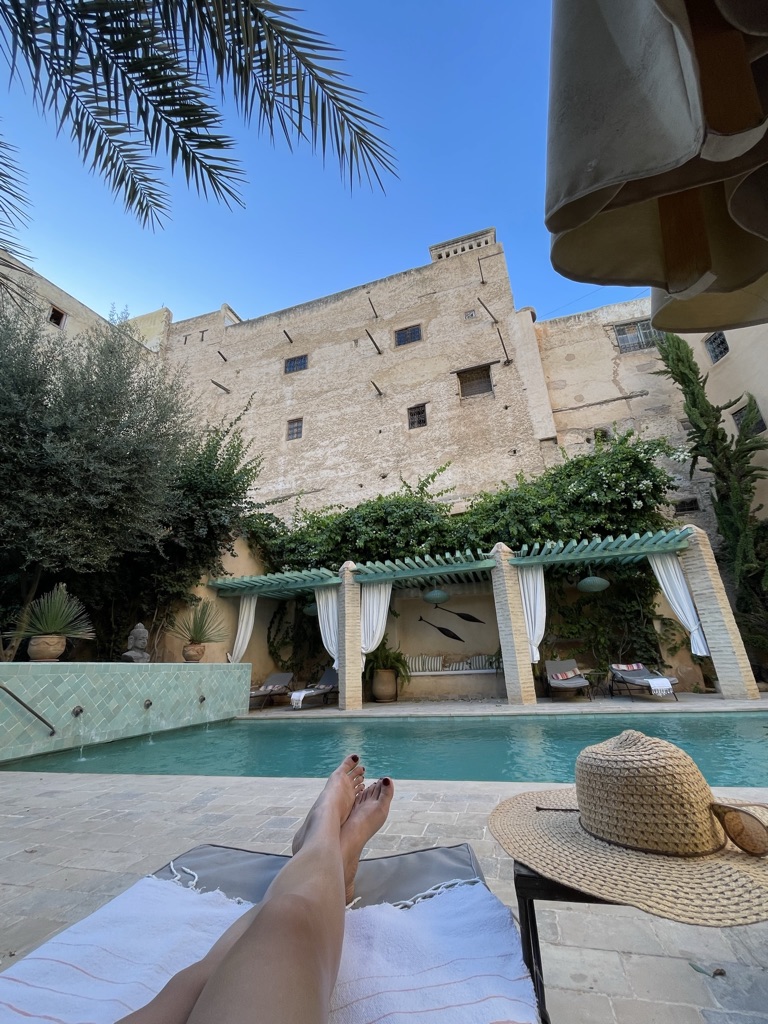

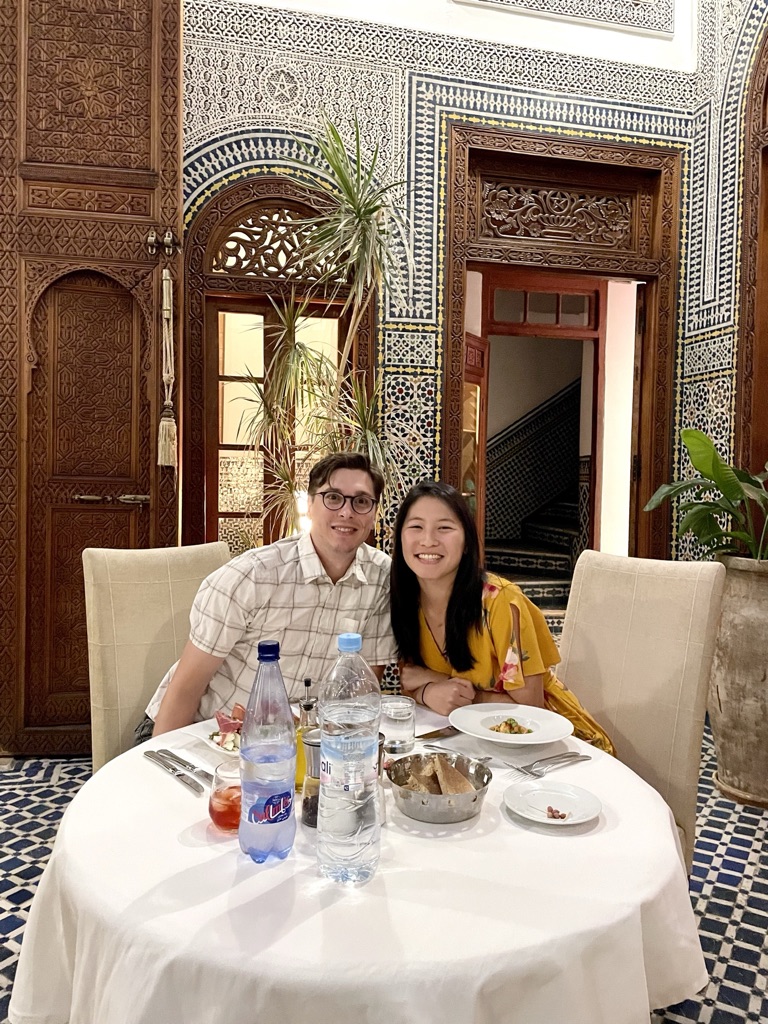
For dinner, we had made a reservation at Dar Roumana, which was highly rated on the internet. A porter arrived at our riad 15 minutes before our reservation to escort us to the restaurant (which we thought was really funny, but turns out very necessary because the Fes medina is just a series of tiny windy passageways that are incredibly easy to get lost in). The restaurant was in a cute courtyard and very charming, but the food was pretty average and this was probably one of the most expensive meals we had in Morocco (easily 10x the price of all the other meals we had) – we kind of learned pretty quickly that a lot of the highly-rated restaurants on TripAdvisor and other sites mostly just cater to tourists.
Day 2: Fes
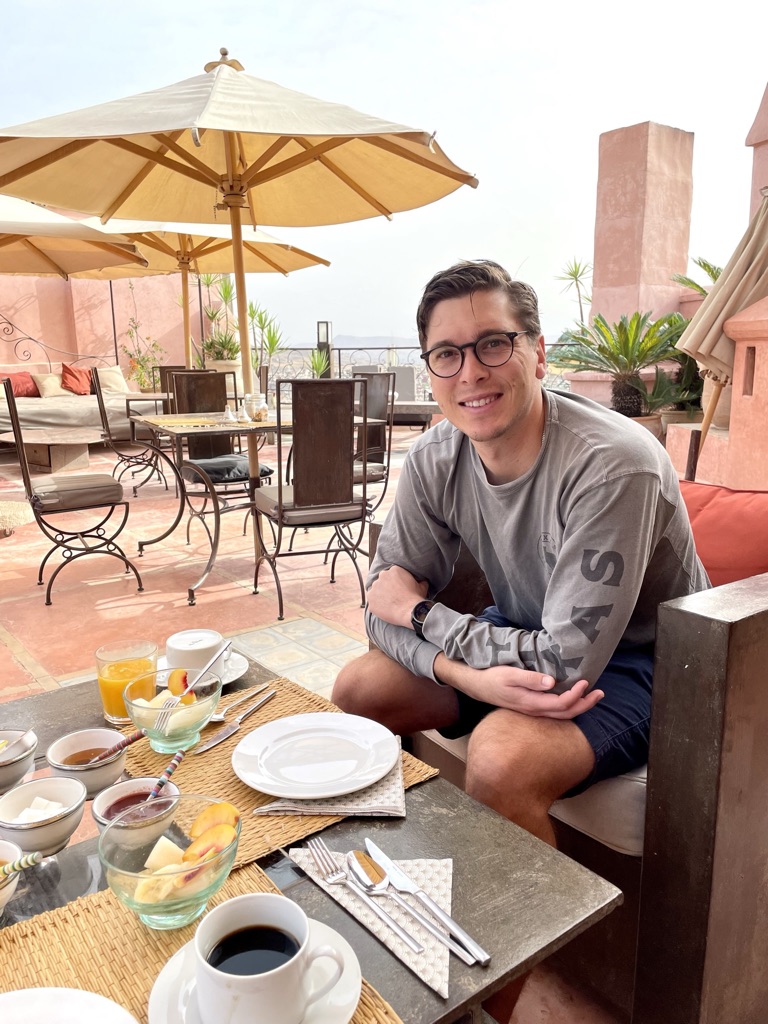
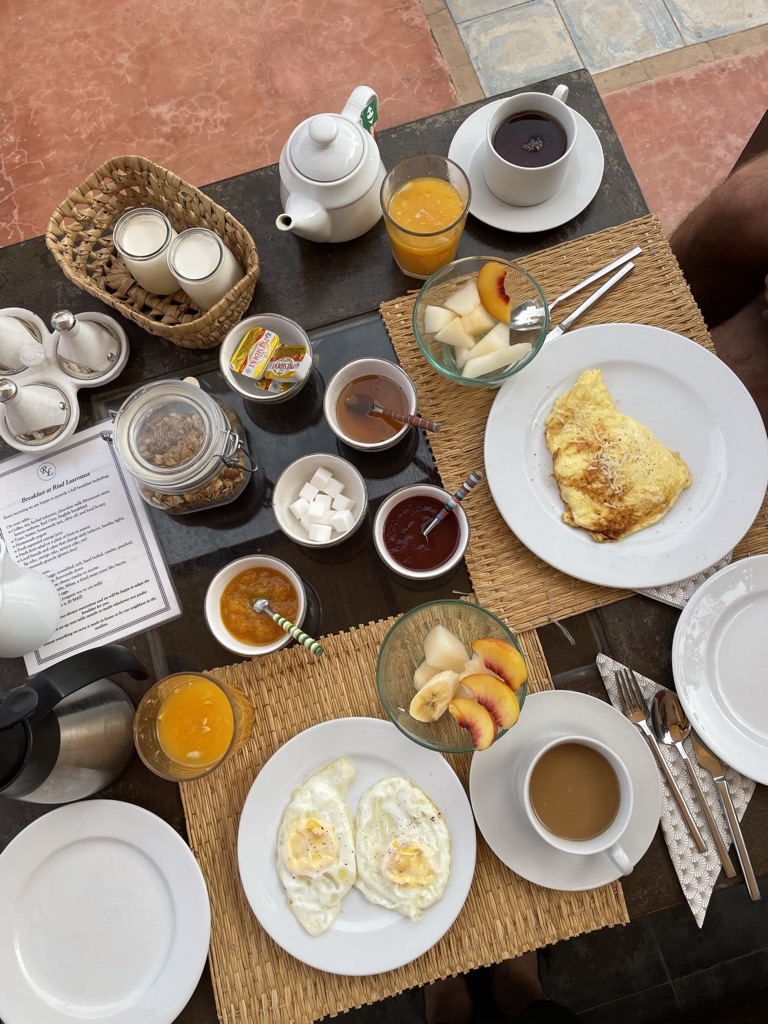
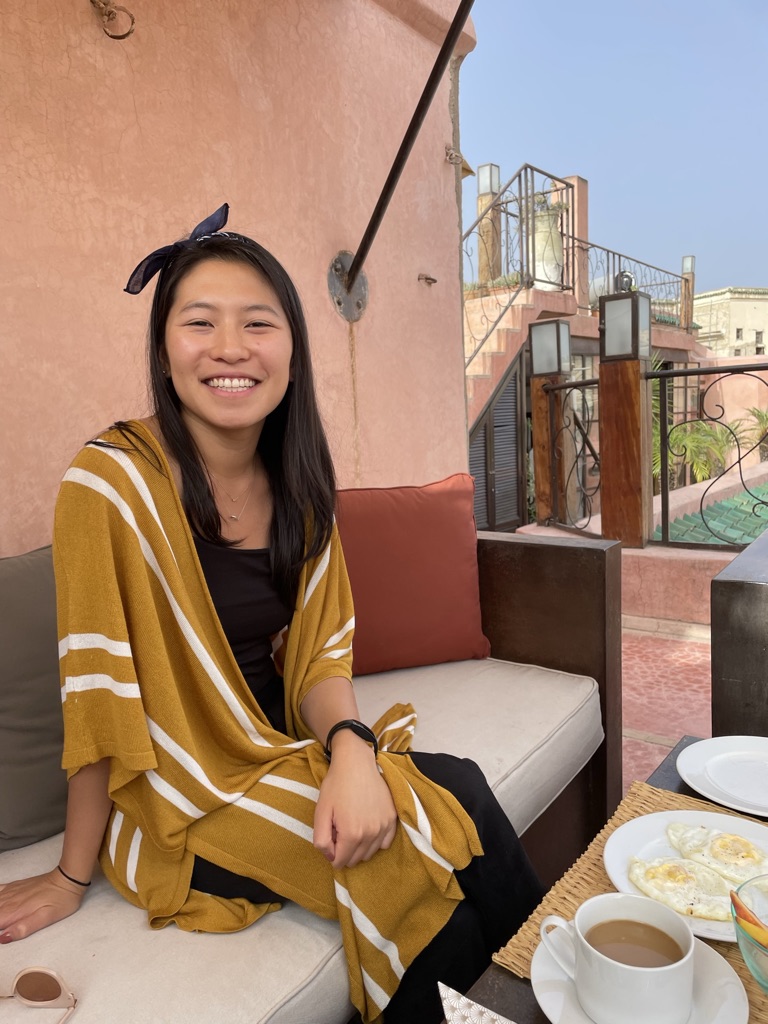
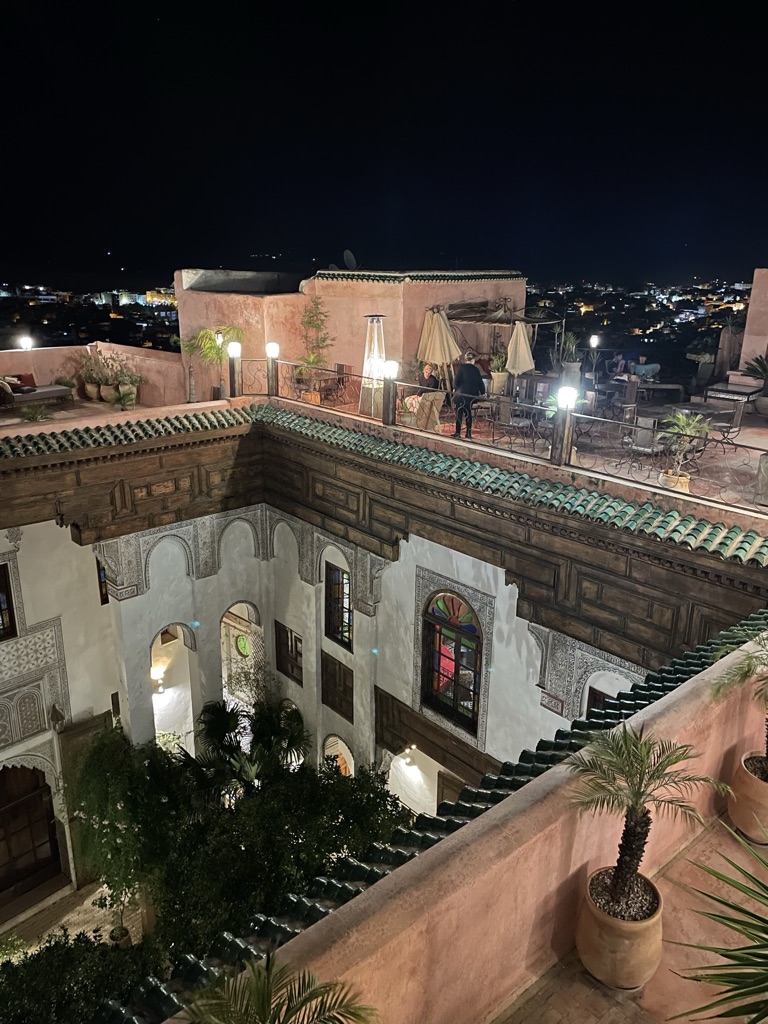
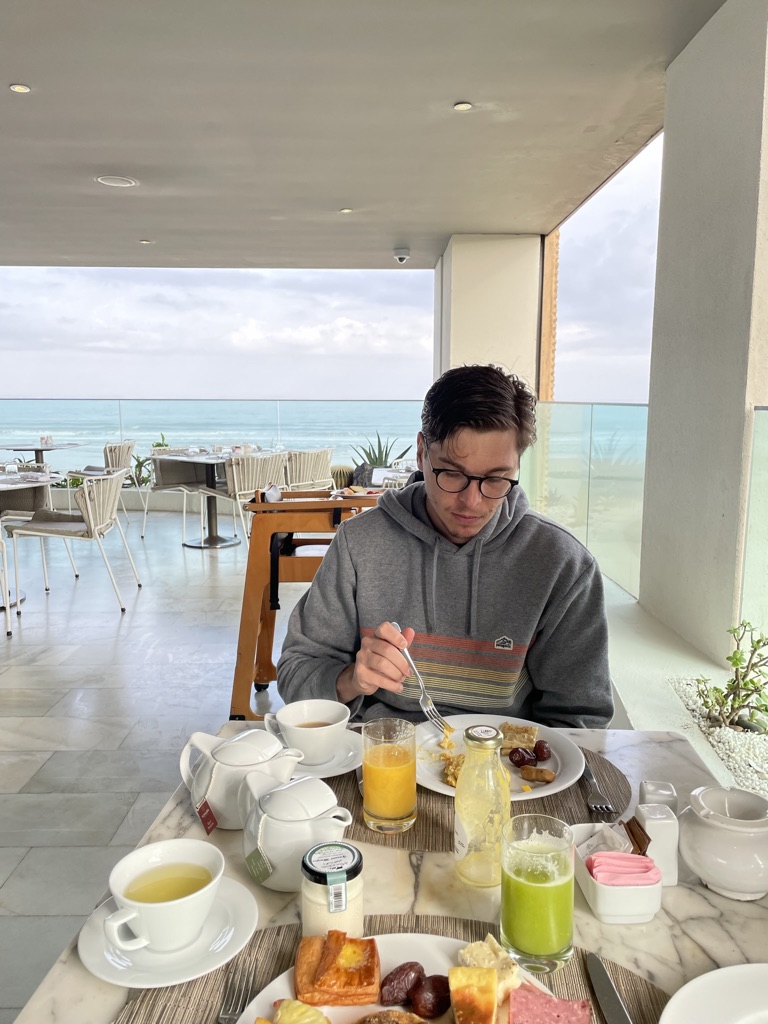
We woke up the next morning and had a lovely breakfast on the rooftop terrace of the riad – again, most of the riads we stayed included a complimentary homemade breakfast with a huge spread of jams, breads, yogurts, eggs (and generally way more food than we could finish).
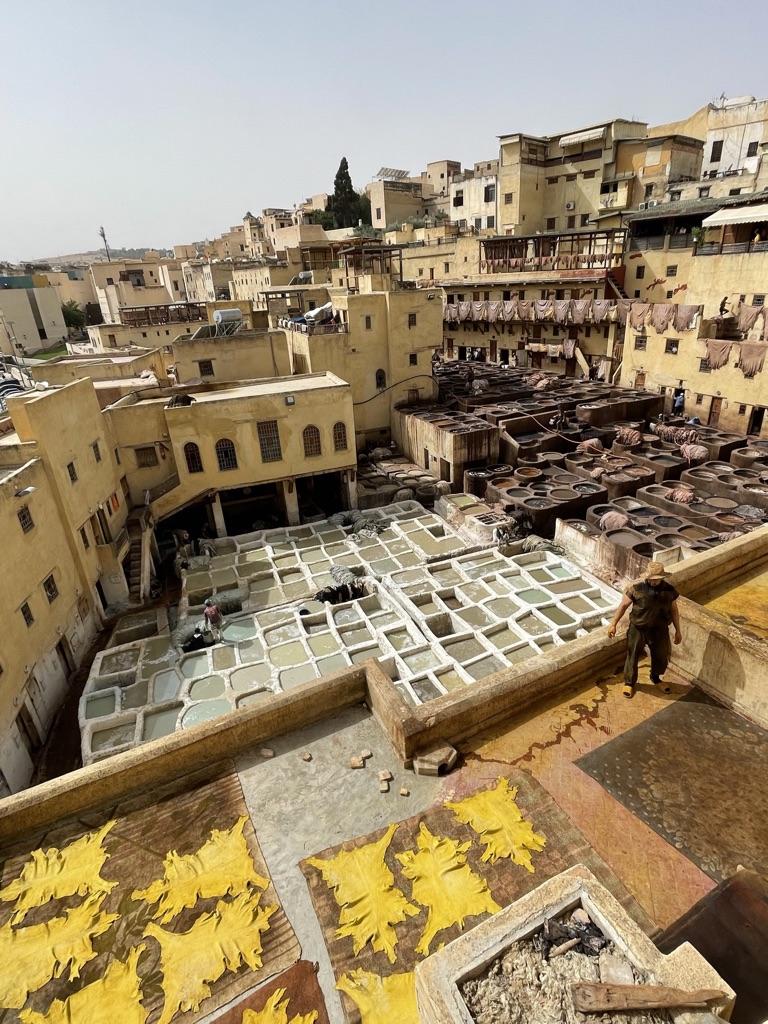
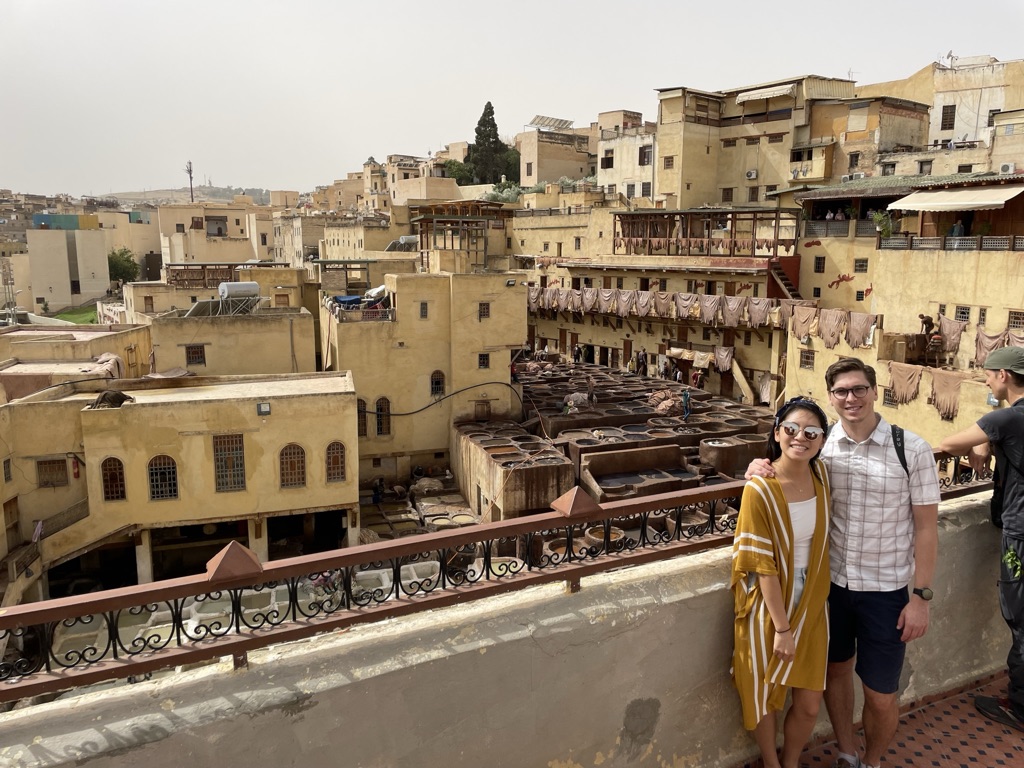
Most of our day today was spent wandering around the medina. We didn’t get an official tour guide or anything, but on our way to Chouara Tannery, some guy (probably because we looked like lost tourists) offered to show us the way and then basically became our tour guide for the rest of the morning. Turns out, this is a thing in Morocco, where people, under the guise of giving you a tour, will just take you to shops and restaurants where you’ll spend money and they get a kick-back. Well, we 100% fell for it and ended up buying some leather poufs (allegedly made from camel hide but who knows) at the tannery and then some scented bar at a spice/oils shop, both of which cost about 10x the price of what they cost at every other street vendor, even after we haggled the price down.
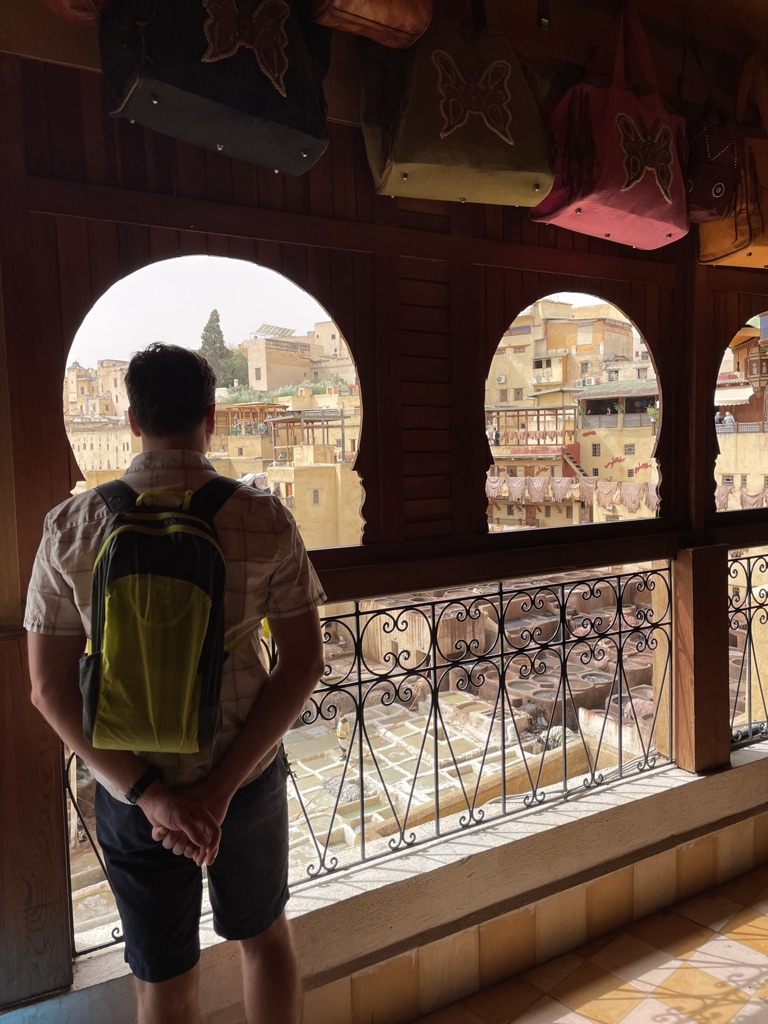
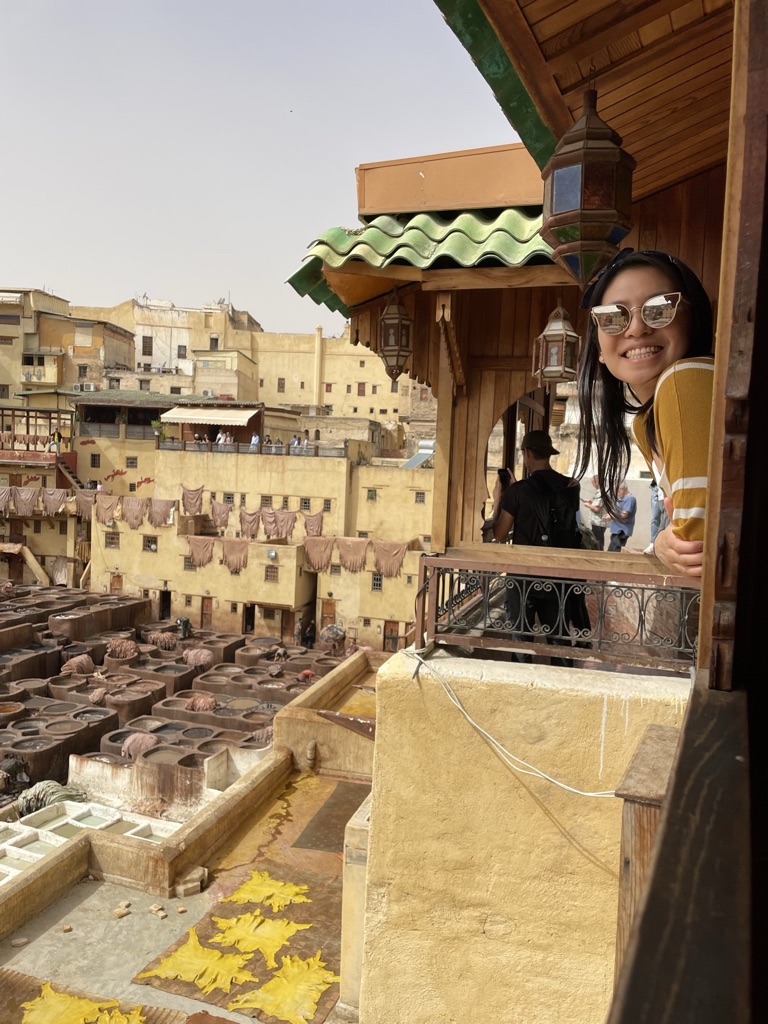
As a side note though, I think the only way to see the Chouara Tannery is by going in to one of the leather shops surrounding and overlooking the tannery. Our guide had to lead us up a very sketchy-looking tiny set of stairs where I truly thought I would get murdered, but then we eventually emerged onto the terrace and saw other tourists.
Despite all the weird quirks and challenges, the tannery was actually very cool and potentially one of the coolest things to see in Fes – Tedd and I probably spent 30 minutes just standing there and watching all the leather stations and people at work.
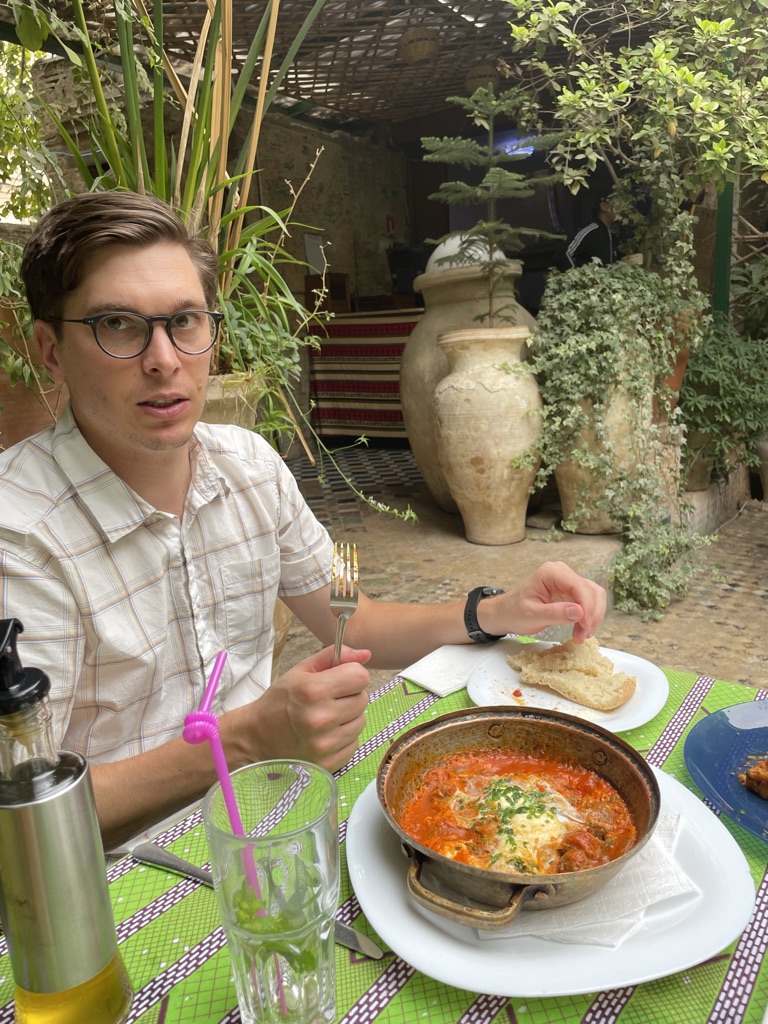
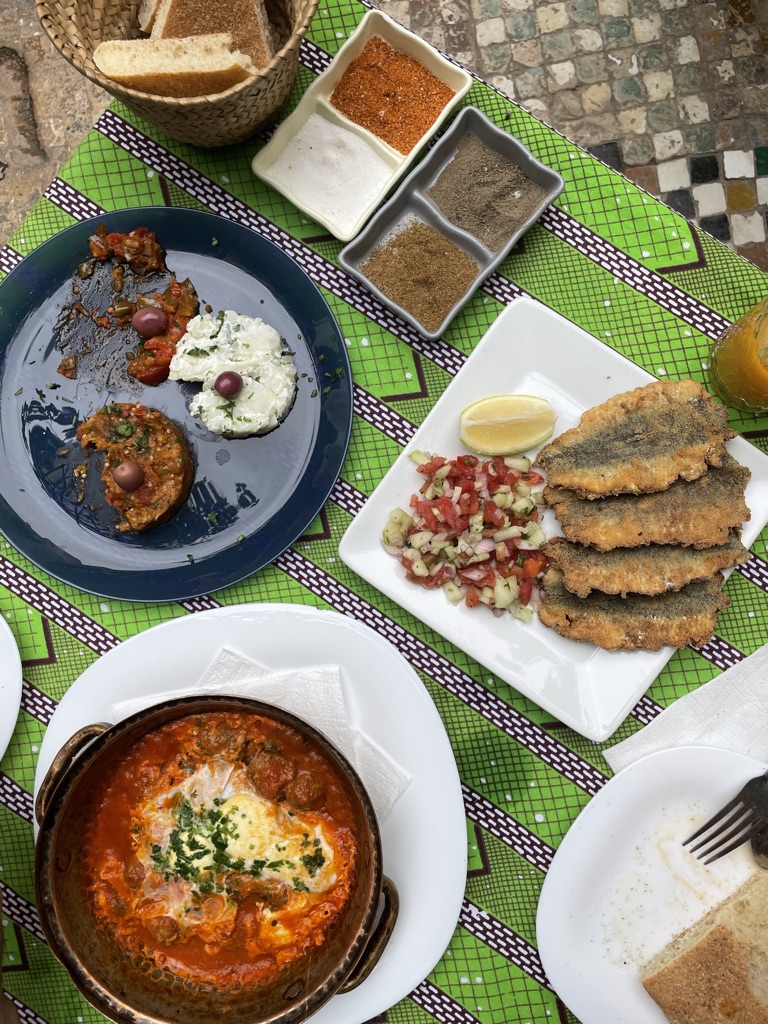
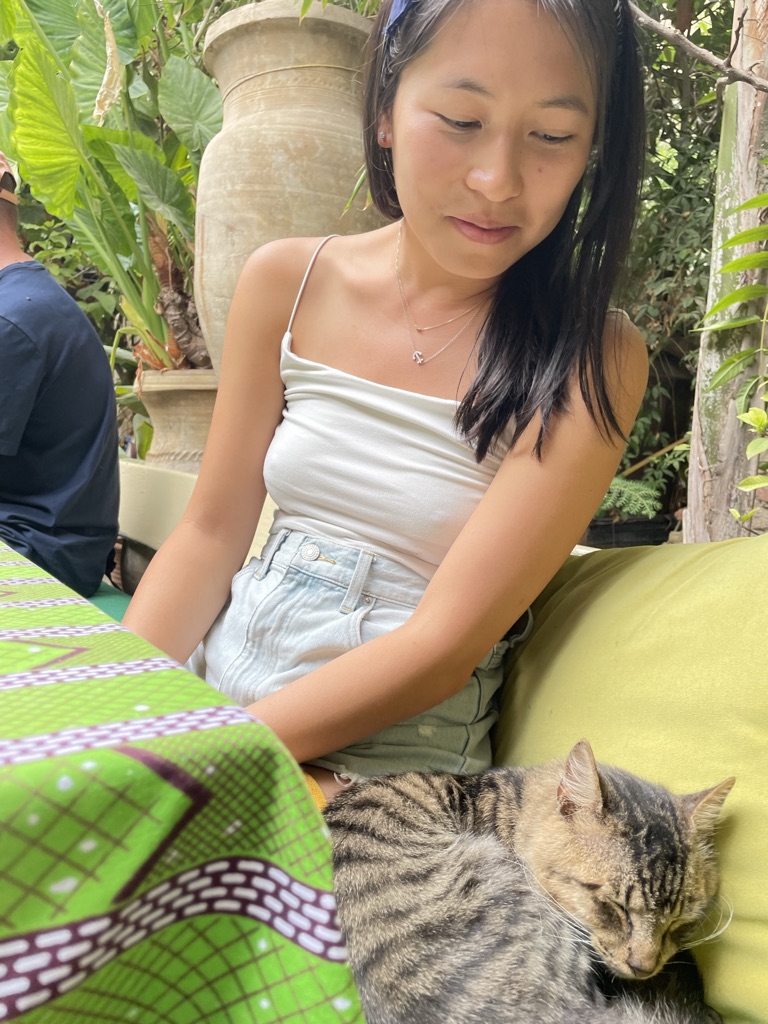
After politely leaving our “tour guide” (who tried to take us to this dungeon-y restaurant where the only other people eating there were other confused/unassuming tourists), we had lunch at The Ruined Garden at Riad Idrissy. It was cute, we had the first of many tagines to come, and also had the first of many meals accompanied by the stray cats that just wander throughout the restaurants and riads of the city. The food was overall decent, and prices were much more reasonable than the restaurant from the night before.
We spent the rest of the afternoon wandering some more, strolling through the Jnan Sbil garden, and hanging out by the pool some more.
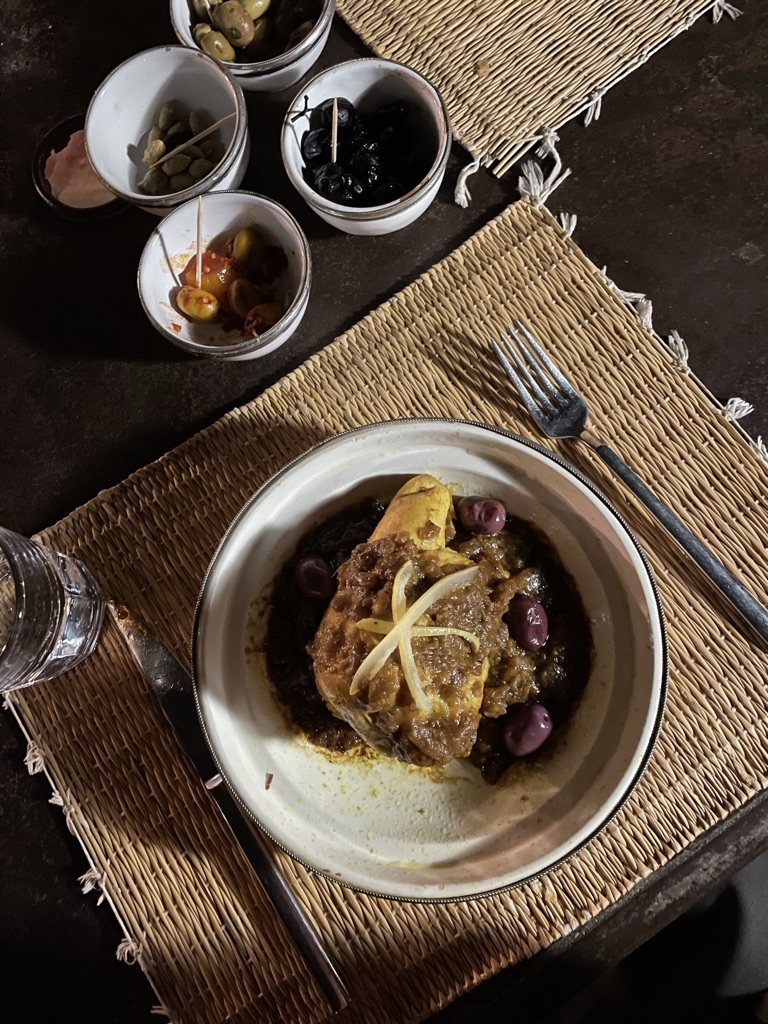
Our riad host had insisted that we have dinner at the riad that night because they were going to have a live jazz band. Most riads, which run like small family-owned bed and breakfasts, usually will prepare you home-made meals if you ask beforehand, and because most riads only have 8-10 rooms, the chef is usually going out to get fresh groceries and cooking a pretty personalized meal for a small handful of guests each day.
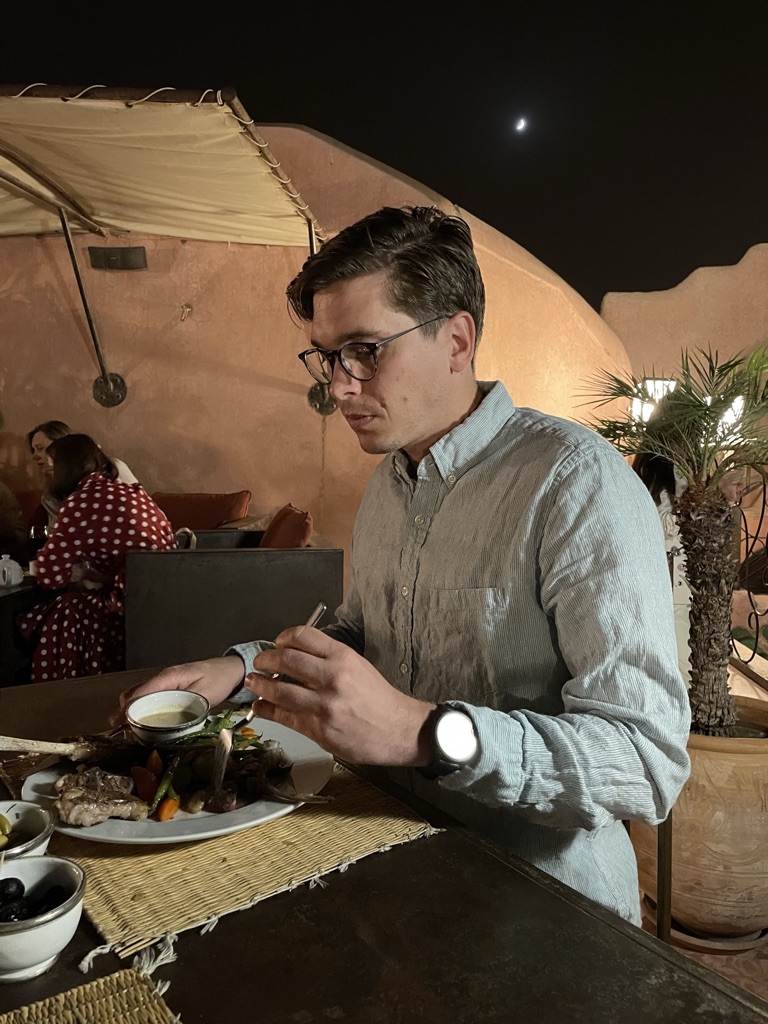
Our dinner on the rooftop of our riad ended up being potentially one of our best meals. The other guests were mostly retirees on holiday from Europe, and the riad host tried to get everyone to dance to the live jazz after all the retirees got drunk on wine – things got lit, one lady even pulled out her camcorder!
Day 3: Sahara Desert
I had wanted to spend a night in the Sahara Desert while in Morocco, but it’s an 8+ hour drive out from any major city and pretty difficult to get to. We had looked into maybe doing an organized tour but ultimately decided to just make the drive out ourselves and booking an overnight stay at a desert camp in the sand dunes. Because we needed to meet our guide in the town of Merzouga by 5pm, we needed to leave Fes by 7am to make the 8+ hour drive – so we woke up before dawn having not slept much because of jet lag, got a bunch of caffeine in us, and set off for the long drive ahead.
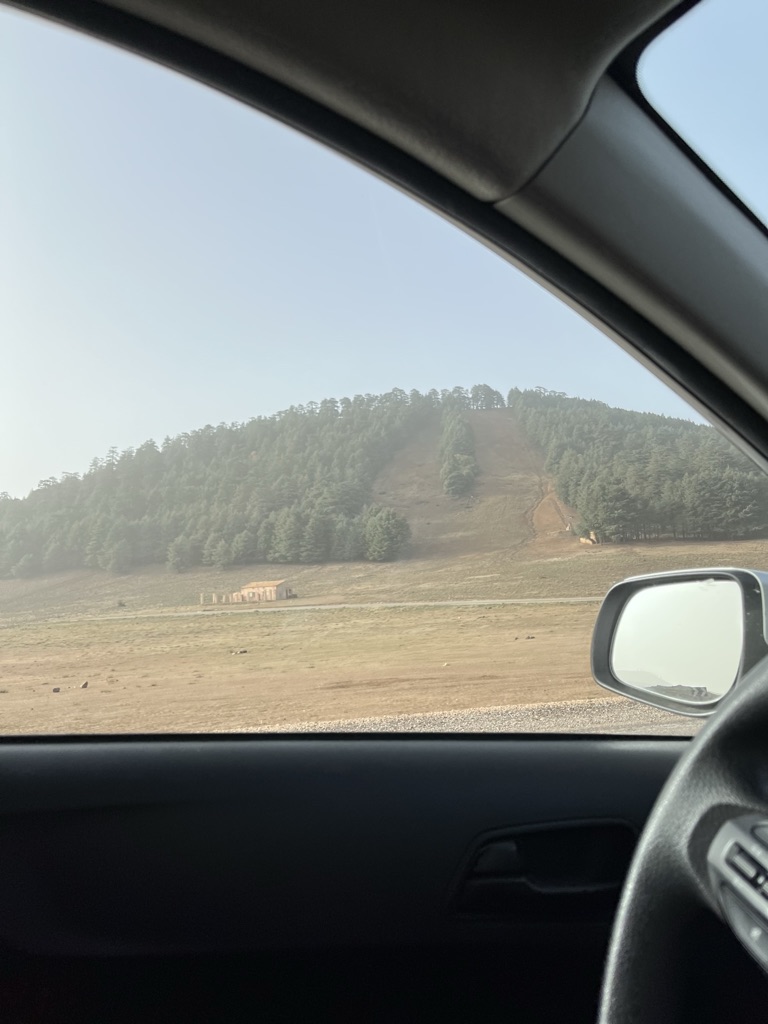
After the caffeine kicked in, the drive itself was actually really beautiful, taking us through some really cool mountainous and desert landscapes. With the exception of some quirks (like there being police checkpoints every few miles, and some difficulty finding bathrooms because gas stations in some of the smaller villages didn’t have bathrooms), the road infrastructure in Morocco is actually pretty well developed and driving in the country was fairly easy, even in some of the more rural/mountainous regions.
We passed through Ifrane in the Atlas Mountains, a ski resort town with little alpine buildings that could’ve easily been Switzerland – who knew Morocco even had ski resorts!
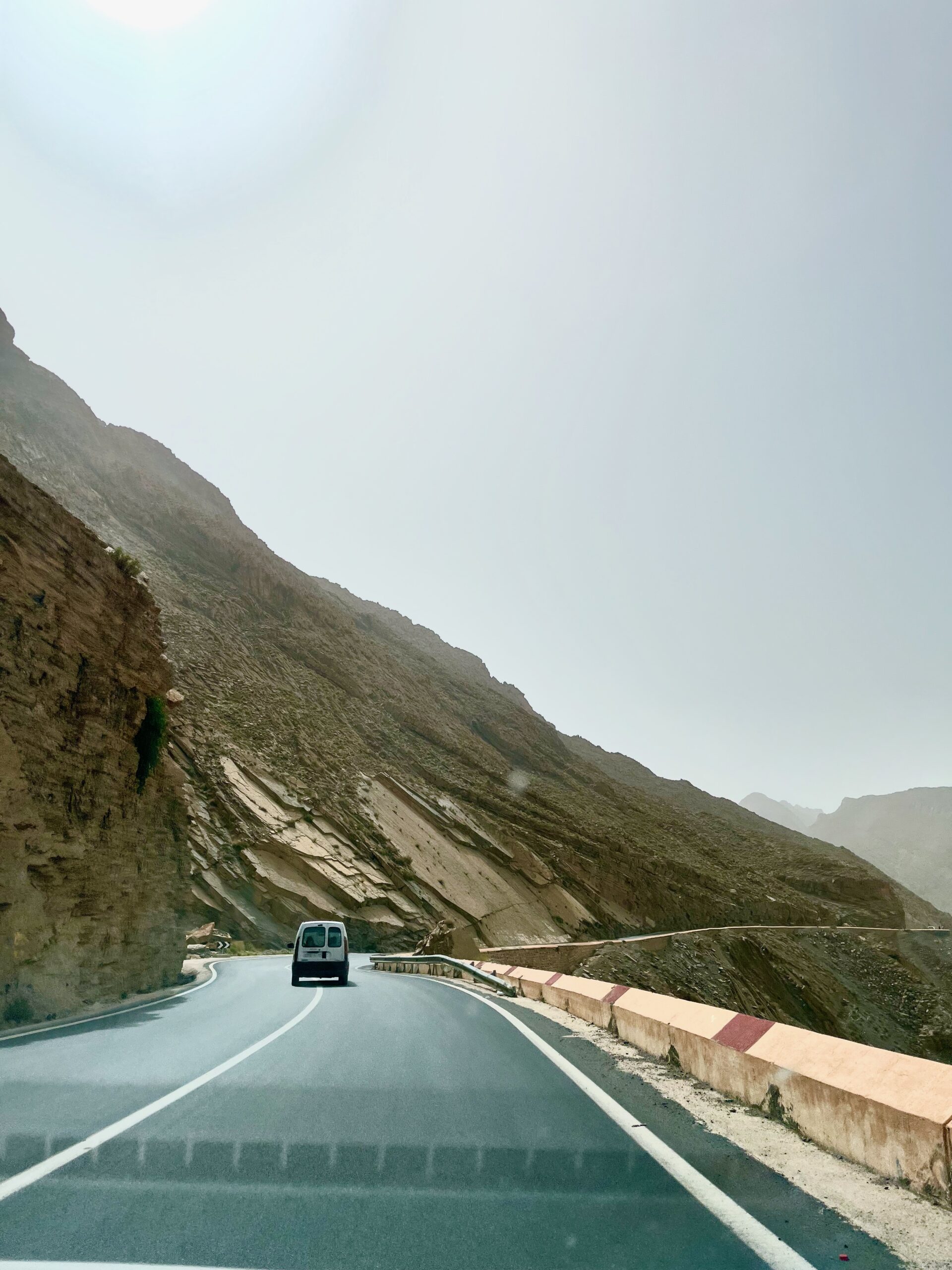
Past the town of Midelt (where we went in search of a Chinese restaurant that had sadly closed recently), we came upon these beautiful canyons with little palm tree-filled oases and adobe houses in the valleys.
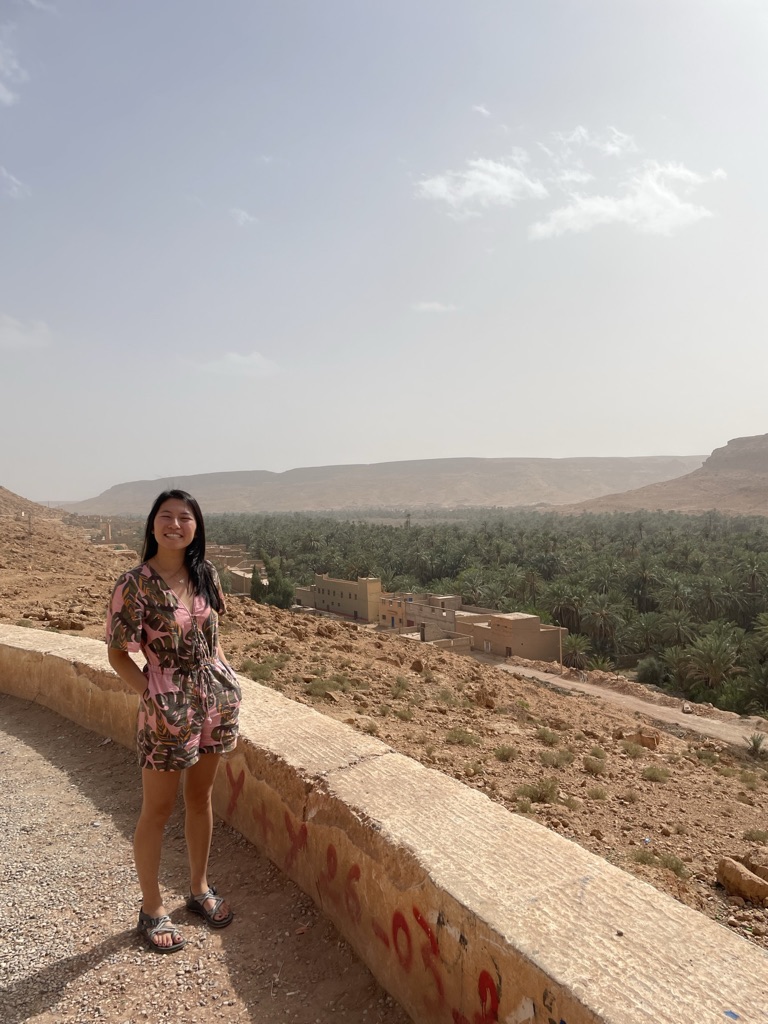
After a very very long day of driving, we finally arrived in Merzouga where we met up with our guides and the others in the group (an assortment of other mostly European tourists plus an Arab couple that seemed like they were on their honeymoon). We parked our car, packed our overnight bags, and set off on camels to get to our campsite.
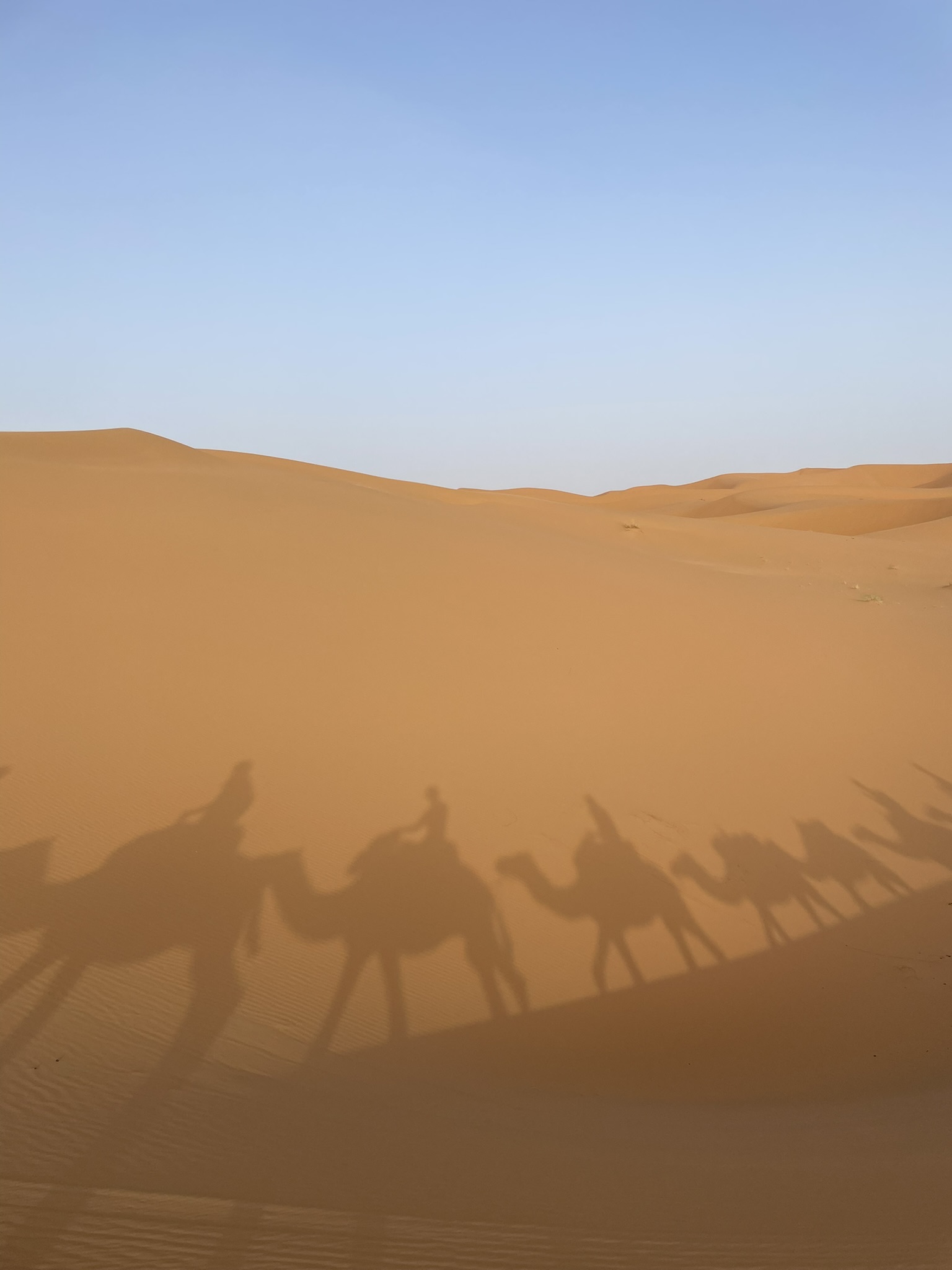
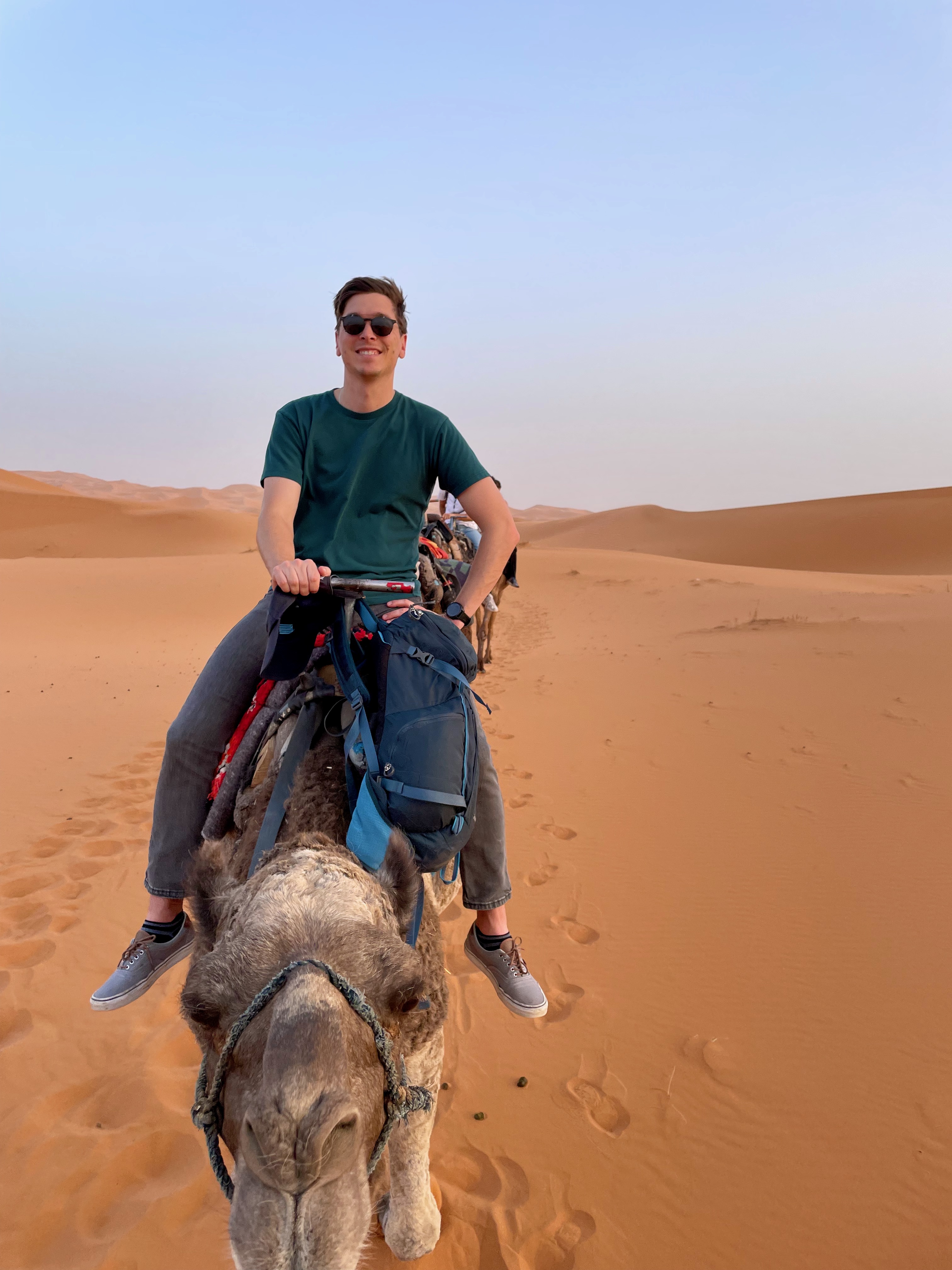
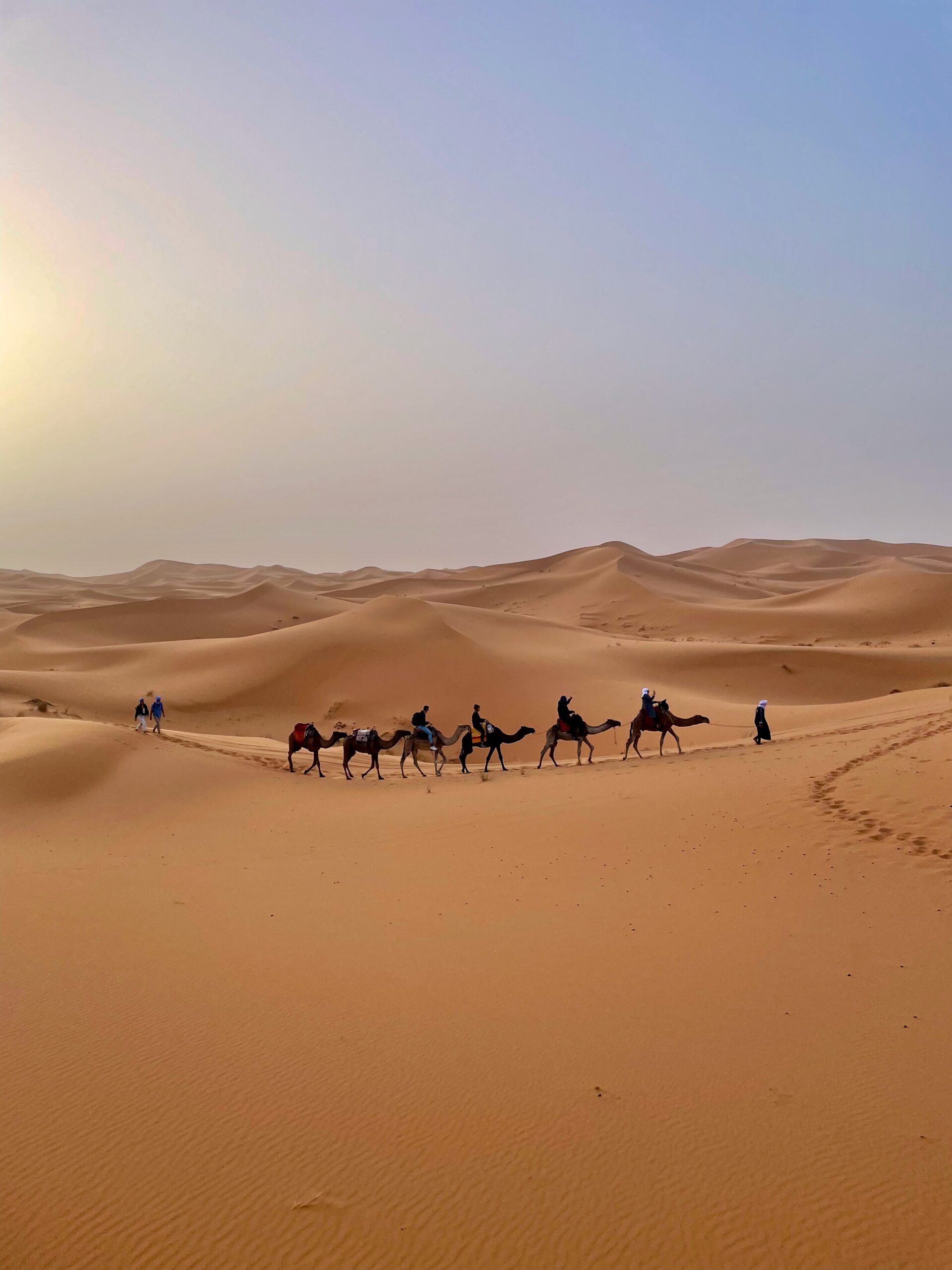
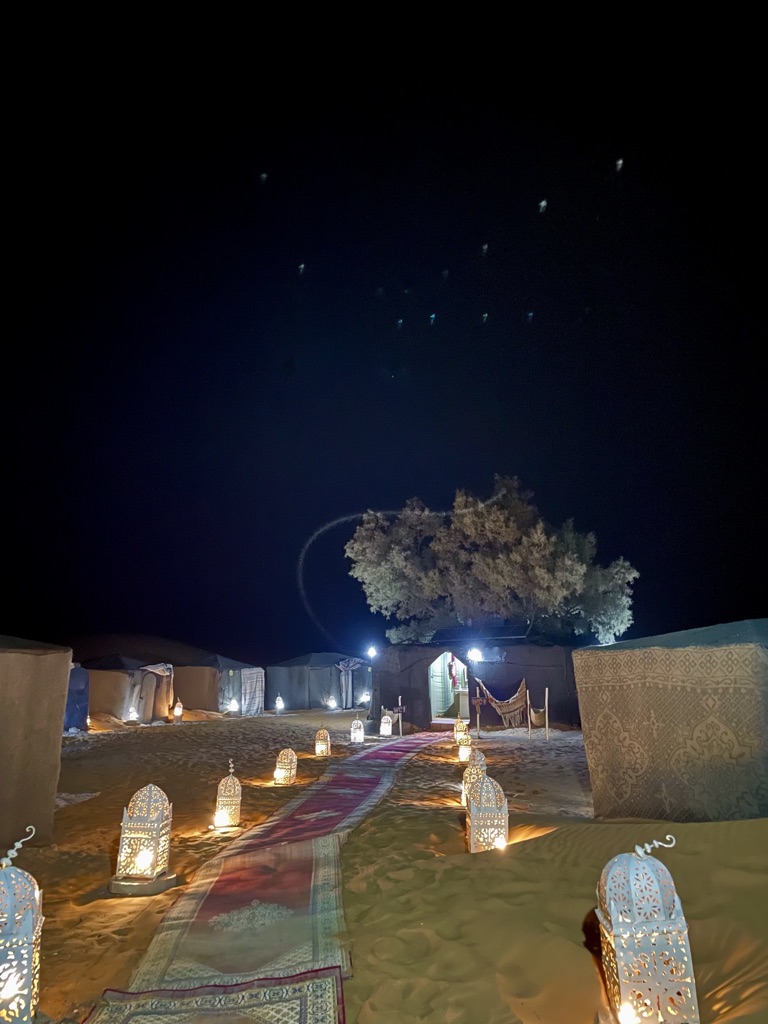
Overall, the Sahara Desert trek was a bit cheesy and touristy. The camel ride was nice and we rode out as the sun was setting through the sand dunes, stopping to do some sandboarding, which was fun. We had a tagine dinner at the camp and then sat around a camp fire while our Berber guides sang and played some drums. The whole thing seemed very set up for tourists (and there were dozens of other similar camps all around doing the same thing) – and because the sky was super hazy, we didn’t get to see a very spectacular sunset or particularly cool stars, which probably would’ve been the coolest part.
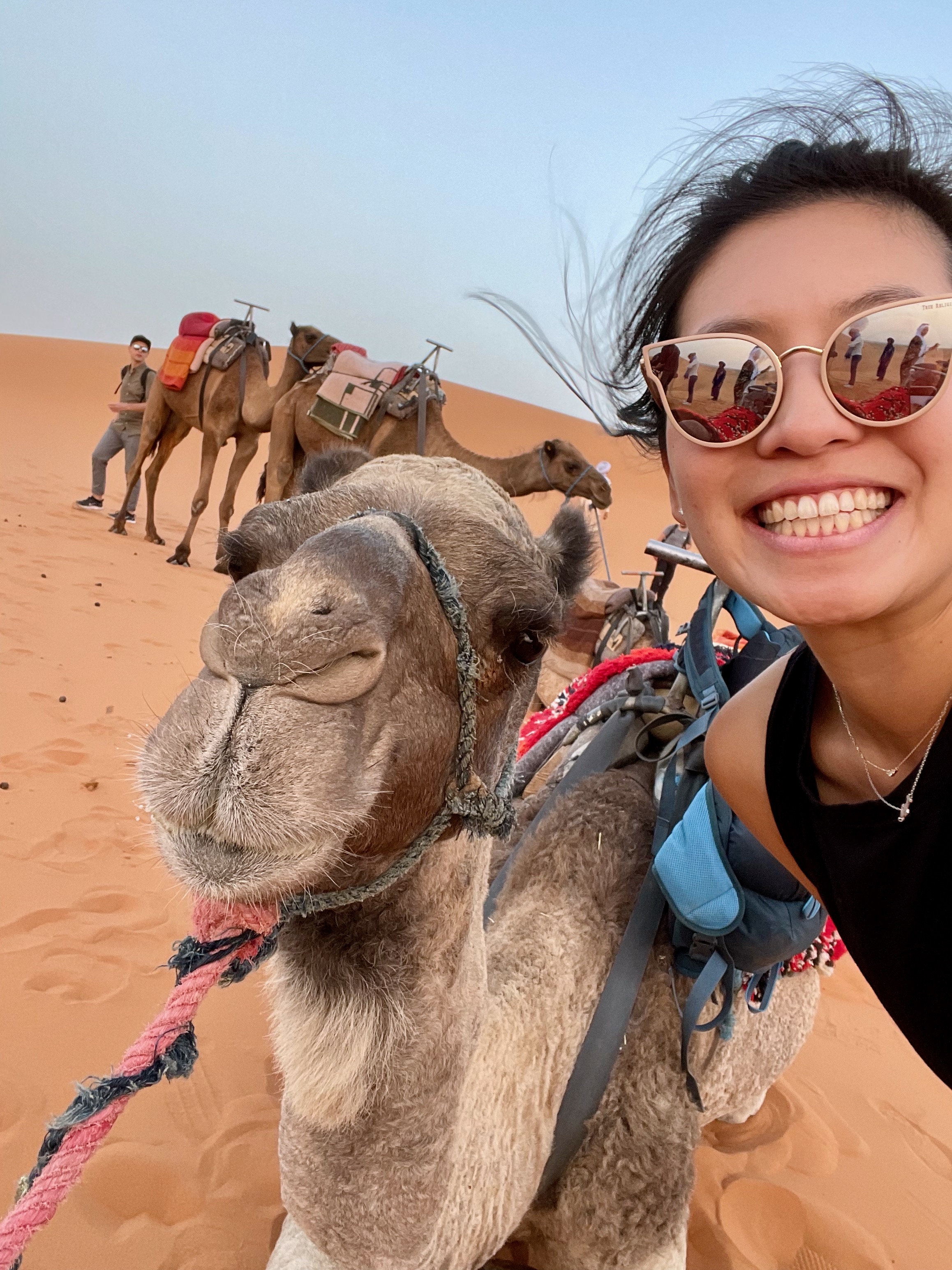
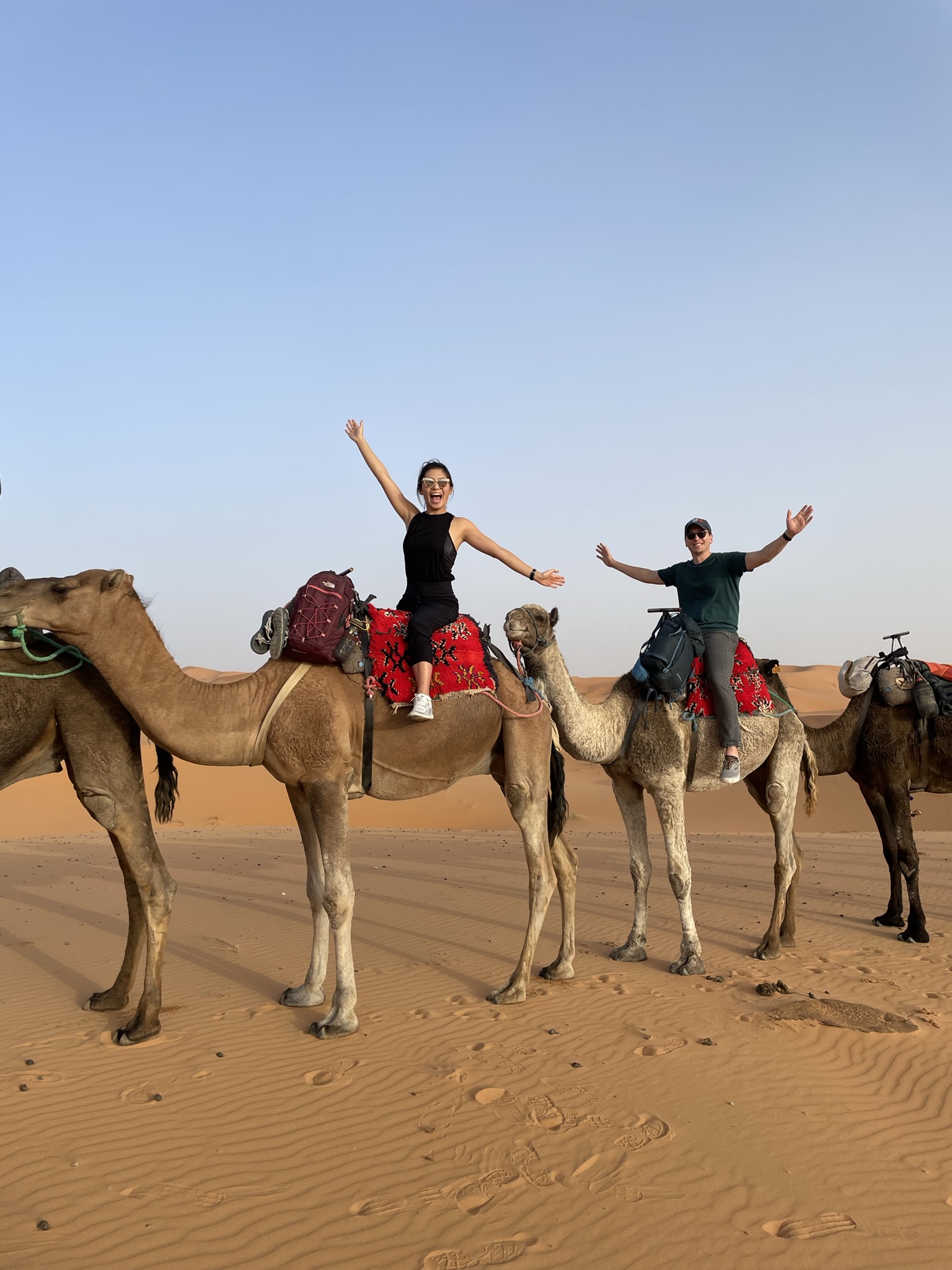
If we went back, I’m not sure if we would’ve done this exact thing, but we did get some fun camel pictures out of it:
Day 4: Climbing in Todra Gorge
We were awoken before dawn the next morning by a chorus of bellows from our camel friends and, still in the dark, we hopped on and rode back through the sand dunes as the sun was rising.
After a quick breakfast at the guesthouse where we parked, we set off again on the 3 hour or so drive to Todra Gorge where we were planning to spend the day climbing.
Before coming to Morocco, I had read a bunch of climbing blogs and done some Mountain Project research about climbing here. While climbing is not a hugely popular/well-developed sport in the country, Todra Gorge has been a well-known climbing spot for some time and European climbers and locals have done a pretty good job maintaining a set of 500+ sport climbing routes in the area.
We had planned to meet up with a guide from Adventures Verticales and stay the night at its affiliated guesthouse, A Secret Garden. Based on our internet research, Adventures Verticales seemed like the main climbing company in the area, but we soon found out the French climber who used to run the company had recently sold it and is no longer operating it, and it was now run by a local family. Nonetheless, The Secret Garden seems to continue to be a small hub for climbers in an otherwise pretty random village in the mountains, and we met some others at the guesthouse who were also here to climb.
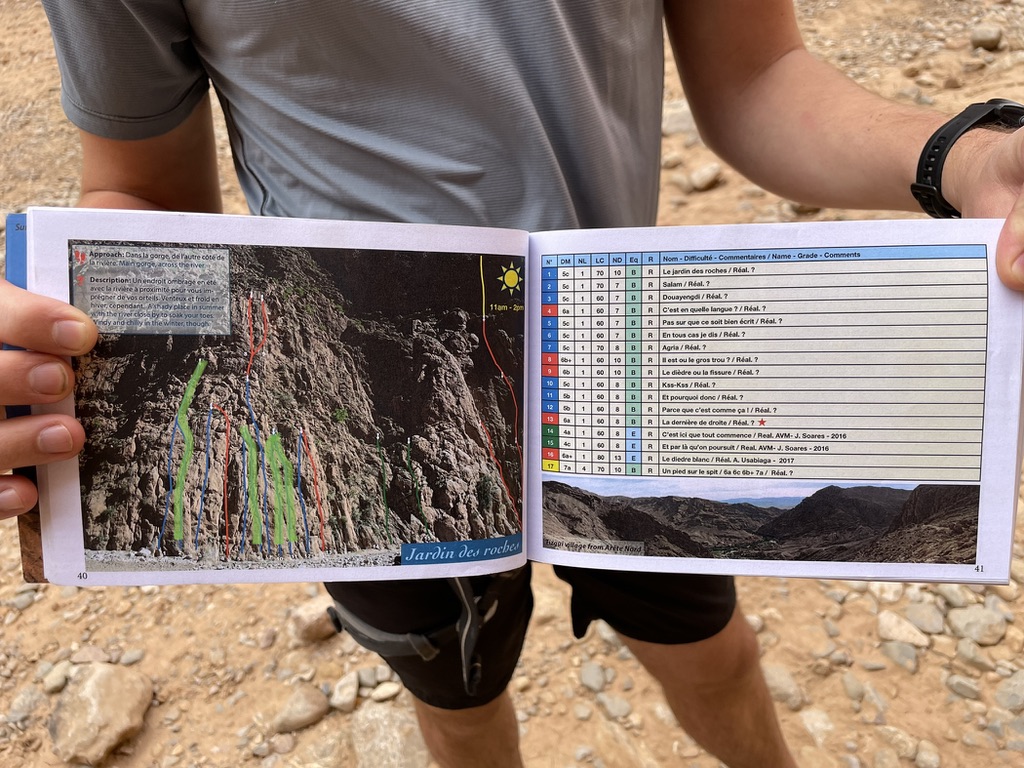
After getting settled in at A Secret Garden and having a nice home-cooked tagine lunch prepared by the owner’s sister, our guide Youssef arrived along with a random Spanish guy (who had met Youssef the day before and needed a belay partner). The Spanish guy (who lived in a van and had driven to Morocco from Spain in his van with his girlfriend) gave us a ride to the gorge and we spent the afternoon climbing with him, his girlfriend, and Youssef.
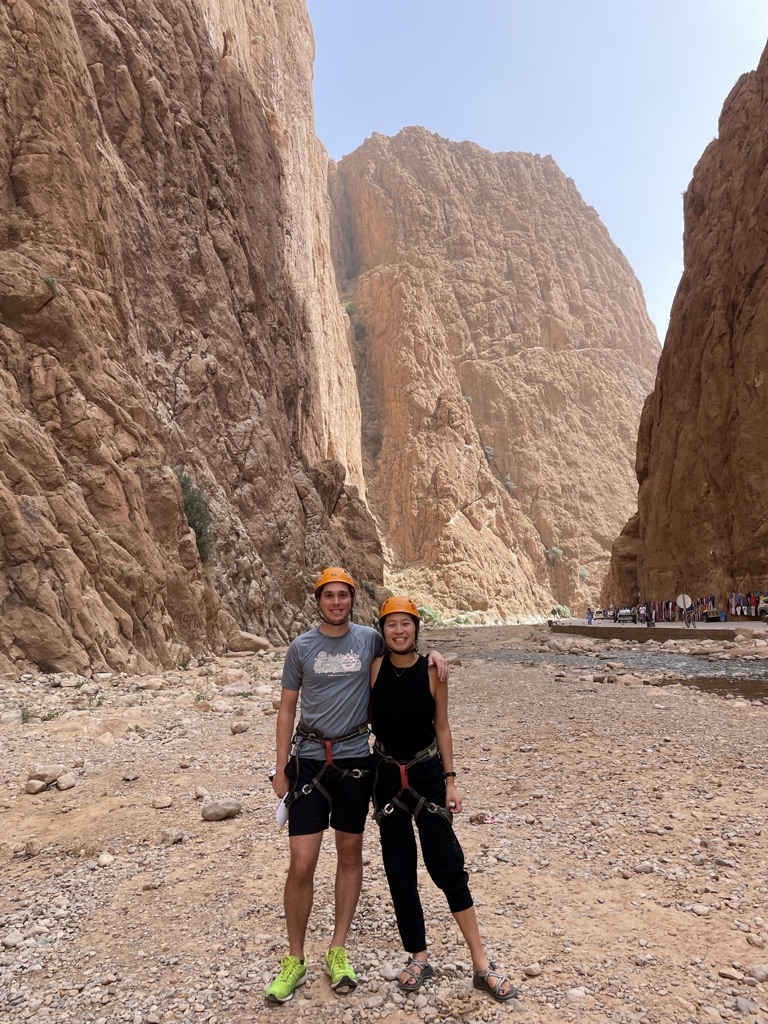
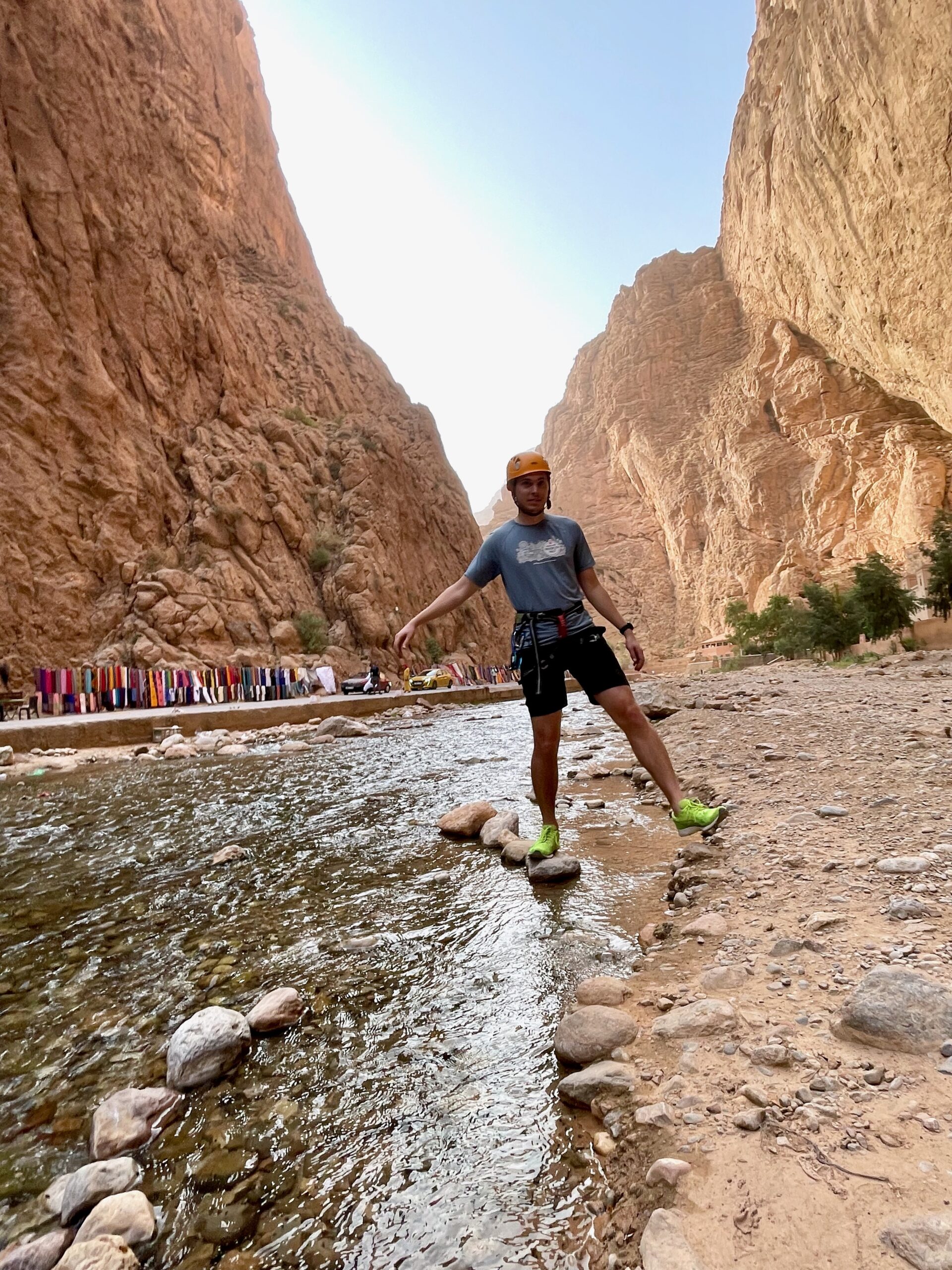
The climbing was really great and, maybe because it was still early in the climbing season, wasn’t crowded at all (there was only one other couple in our area).
Our guide Youssef grew up in Todra Gorge and kind of just learned to climb by scrambling up rock faces. Because climbing is not a super developed sport here, you can’t just walk into an REI and buy climbing equipment – most of the equipment he had was purchased second-hand off climbers who visit from Europe and are willing to sell him their equipment when they leave (and indeed, Youssef almost bought some rope off of the Spanish guy).
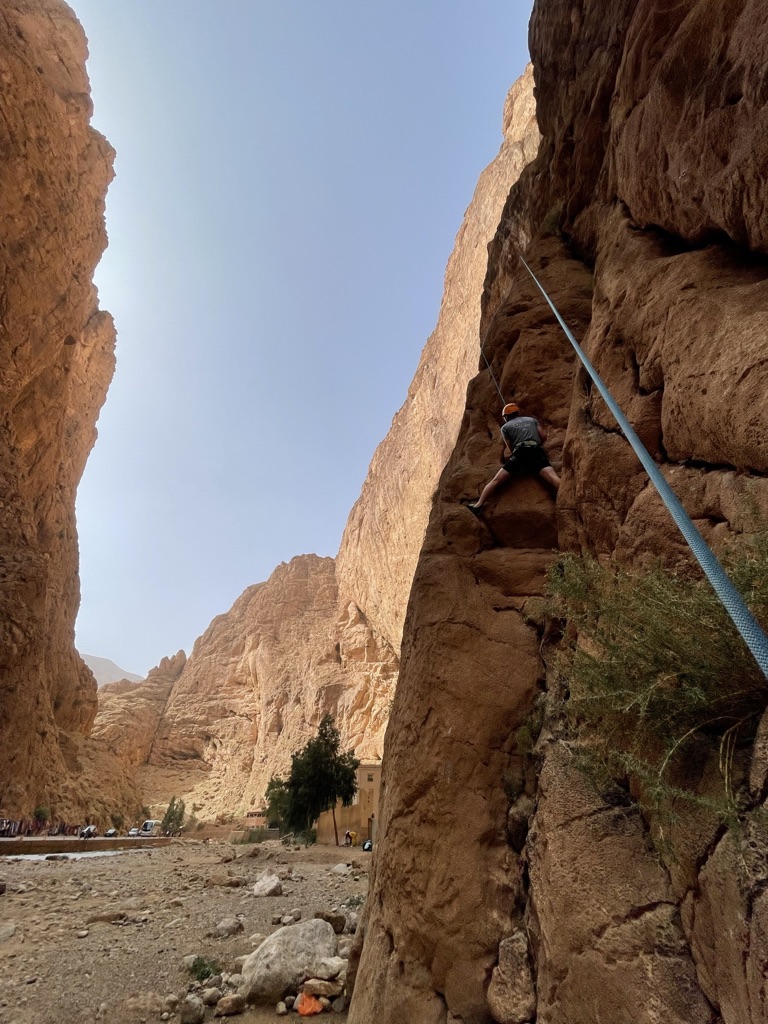
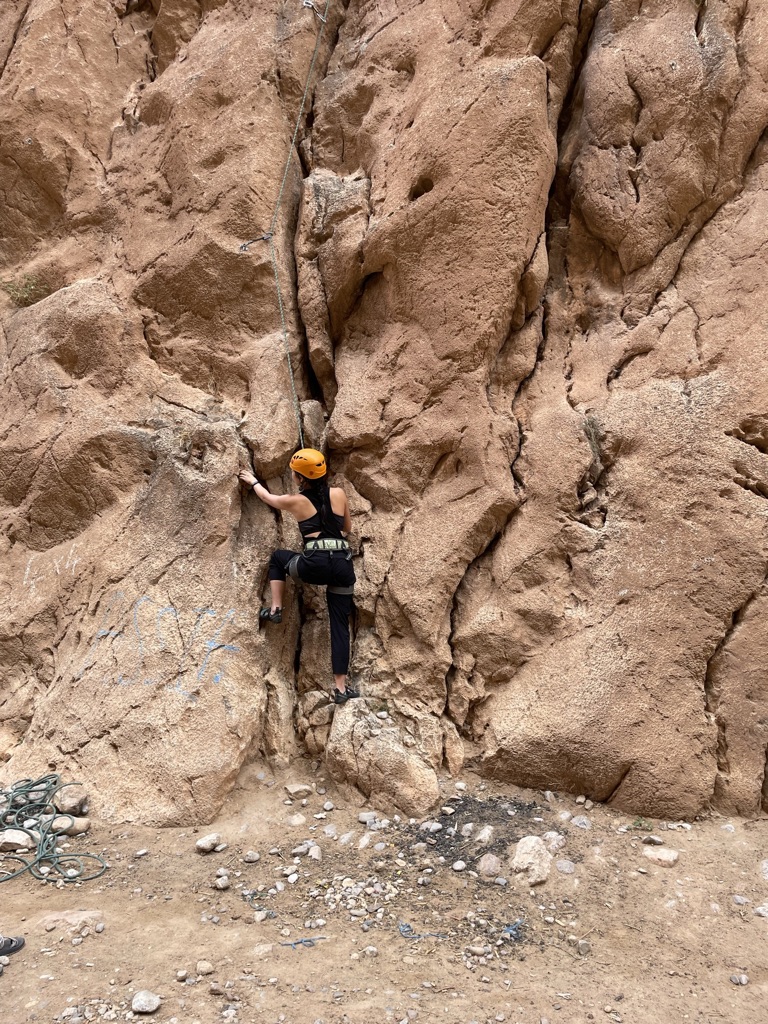

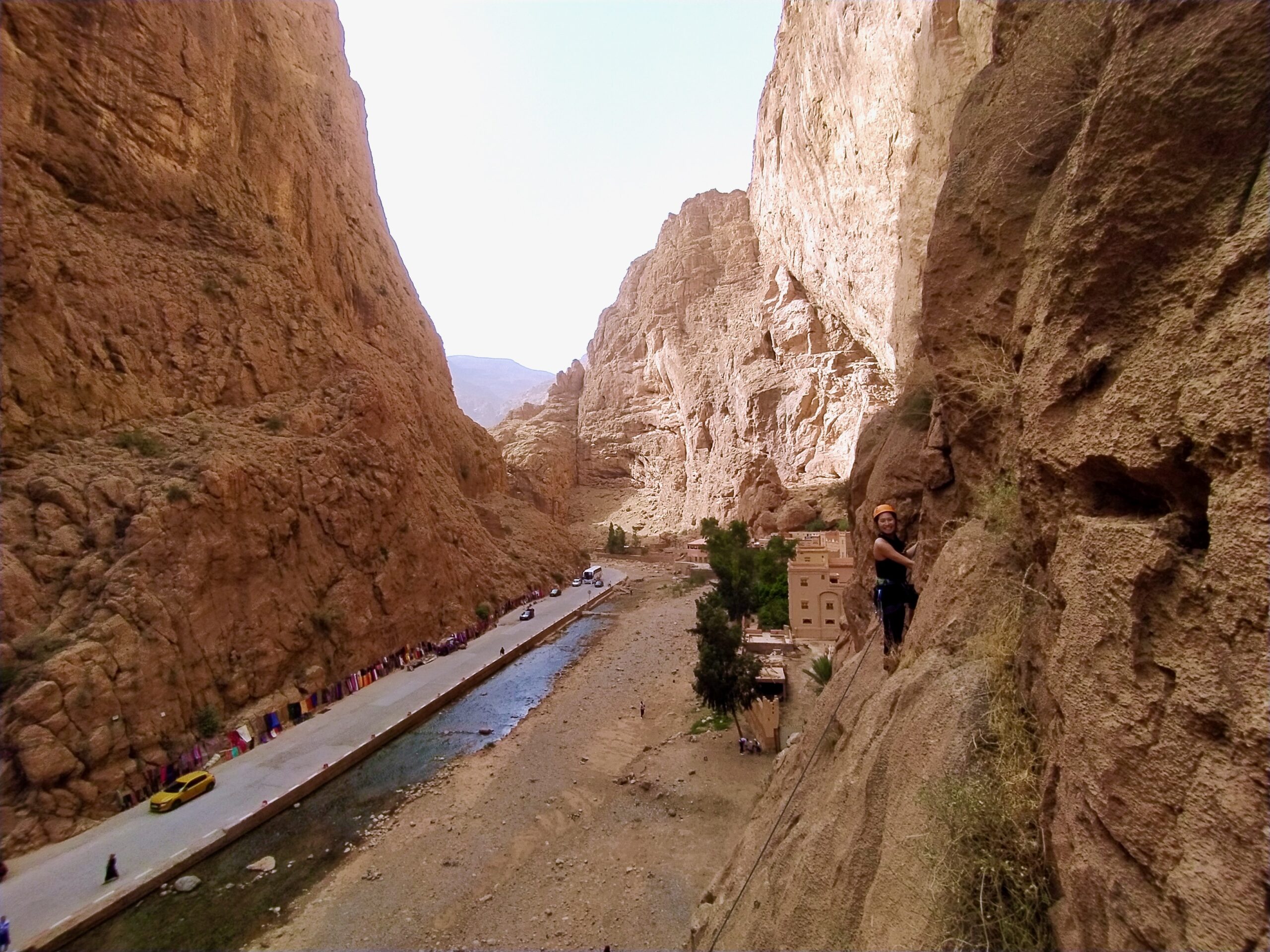
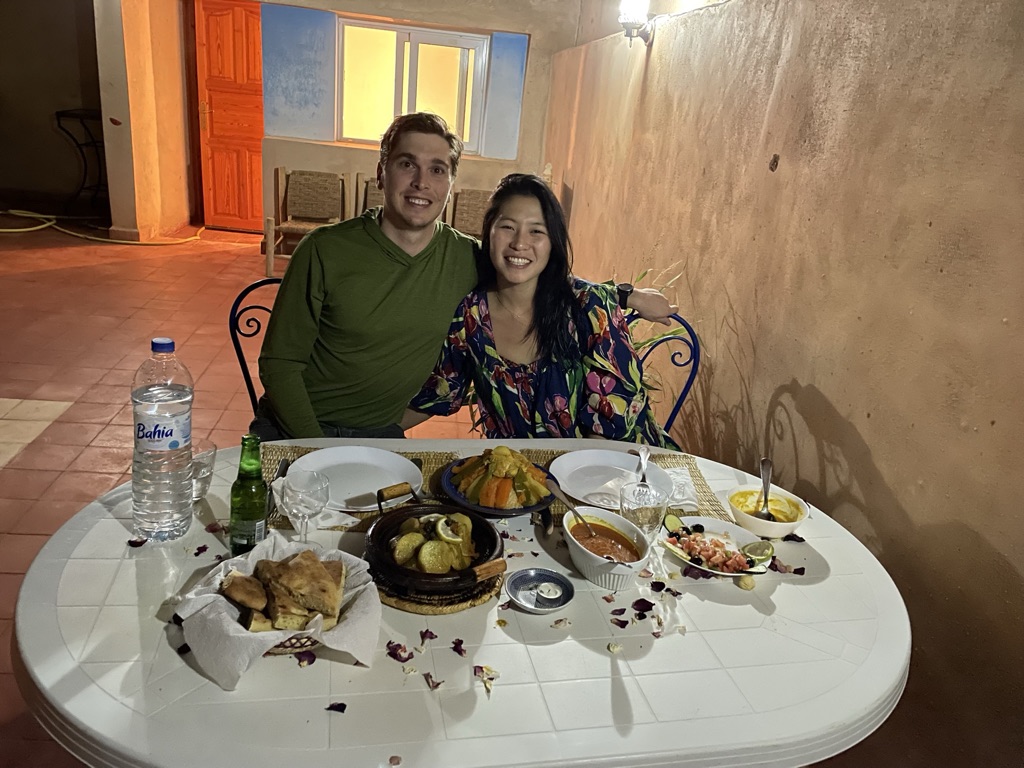
We had a great time and basically climbed until dark, and when we returned to the guesthouse, a really nice dinner was waiting for us. It seemed like none of the other guests had planned to eat dinner at the guesthouse that night, so we were the only ones and the owner was very intent on setting up a romantic, private dinner for us on the rooftop. He set out flower petals and even brought up a portable speaker and tried to set the mood by playing music off his phone (but then just had to kept coming up to answer the phone when he got phone calls haha).
Day 5: Drive through the Atlas Mountains to Marrakech
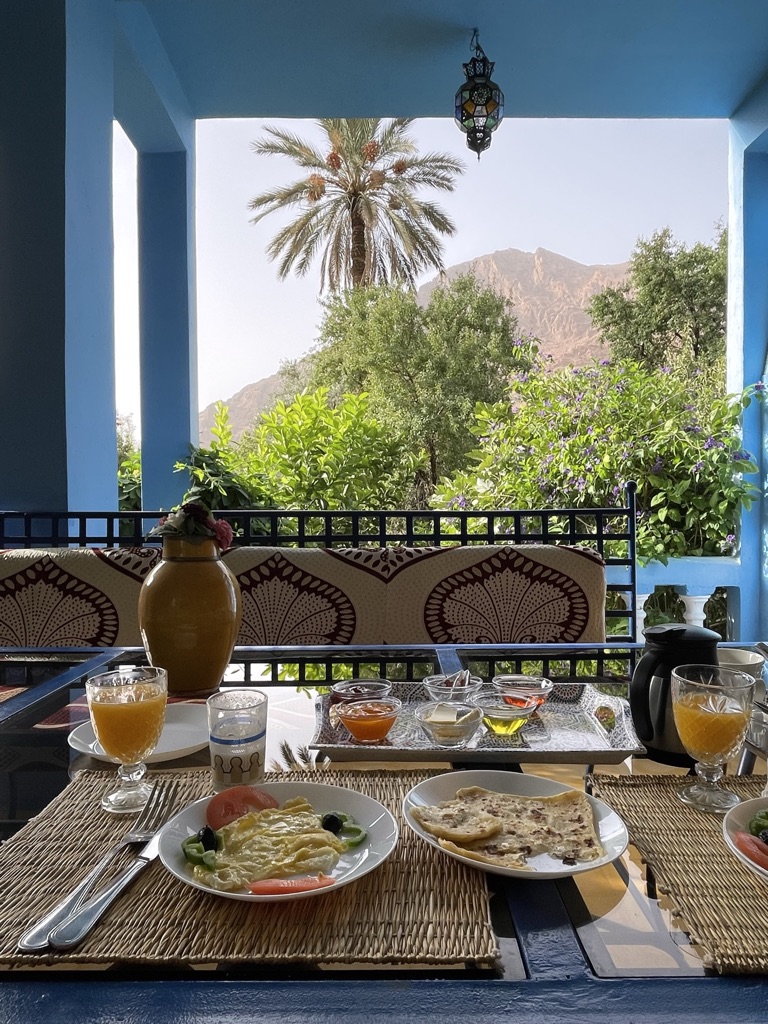
We woke up to another lovely home-made breakfast at A Secret Garden before setting off on another long 7-hour drive to Marrakech.
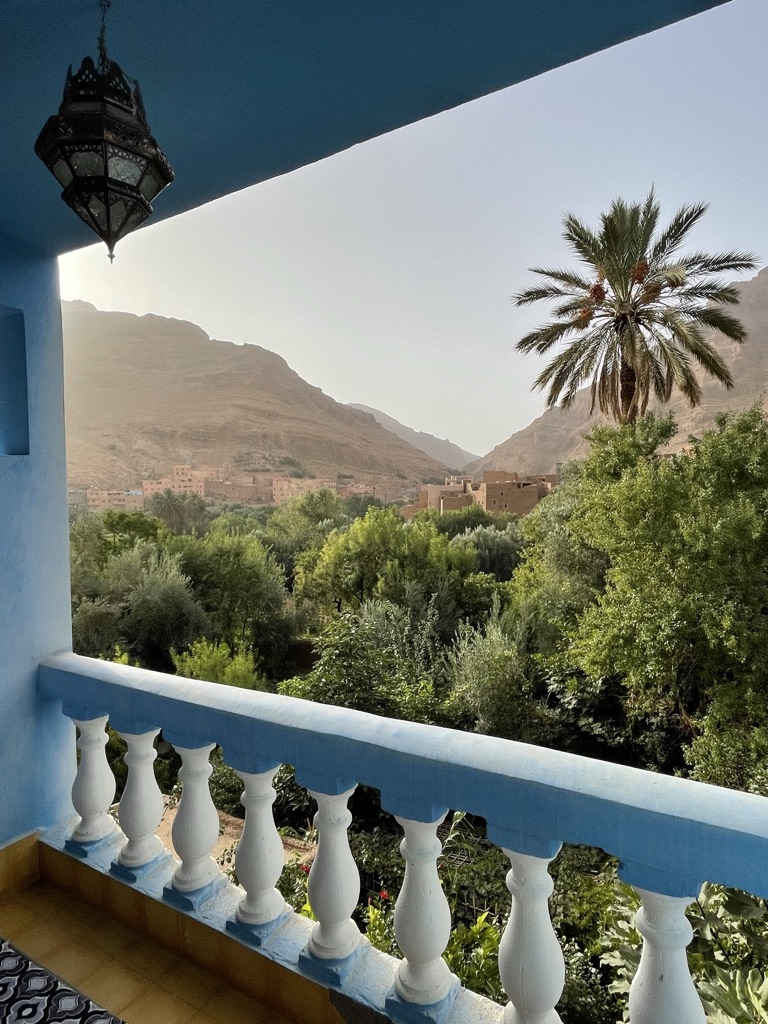
Upon leaving, we realized we didn’t have enough cash to pay for our stay, and the guesthouse was not set up to accept credit cards. Because we were in a pretty small village, the closest ATM was in the larger town of Tinghir down the mountain, about a 20 minute drive away. The guesthouse owner, ever the great sport, had to hop in our car and ride to town with us so we could get cash to pay him before leaving.
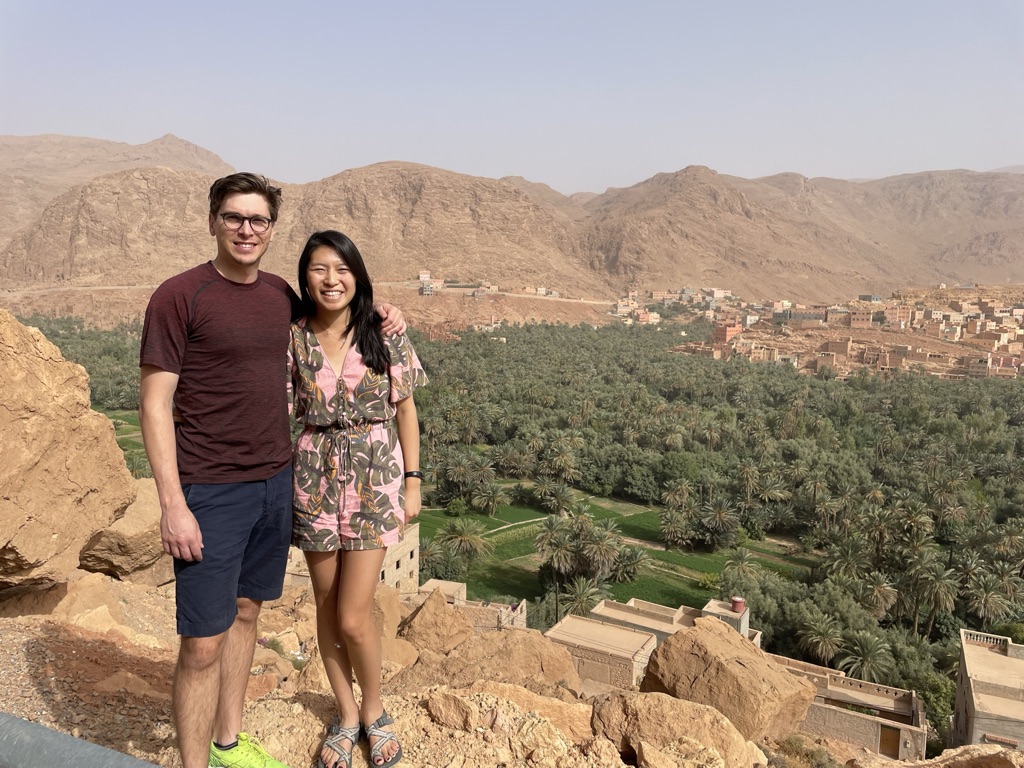
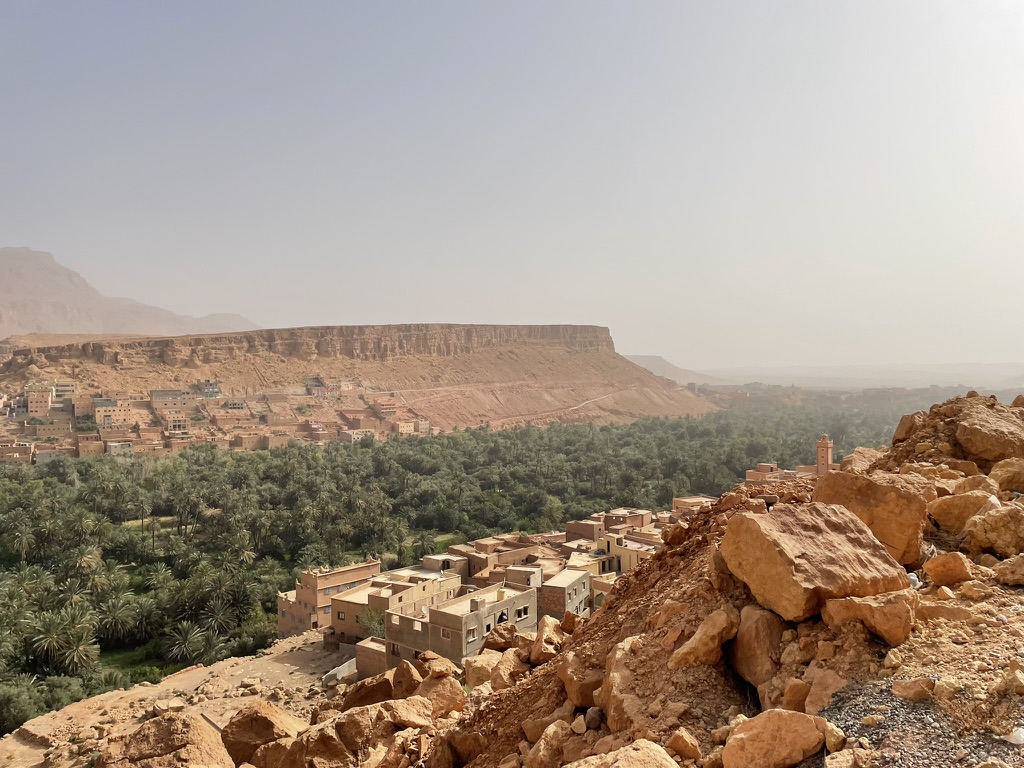
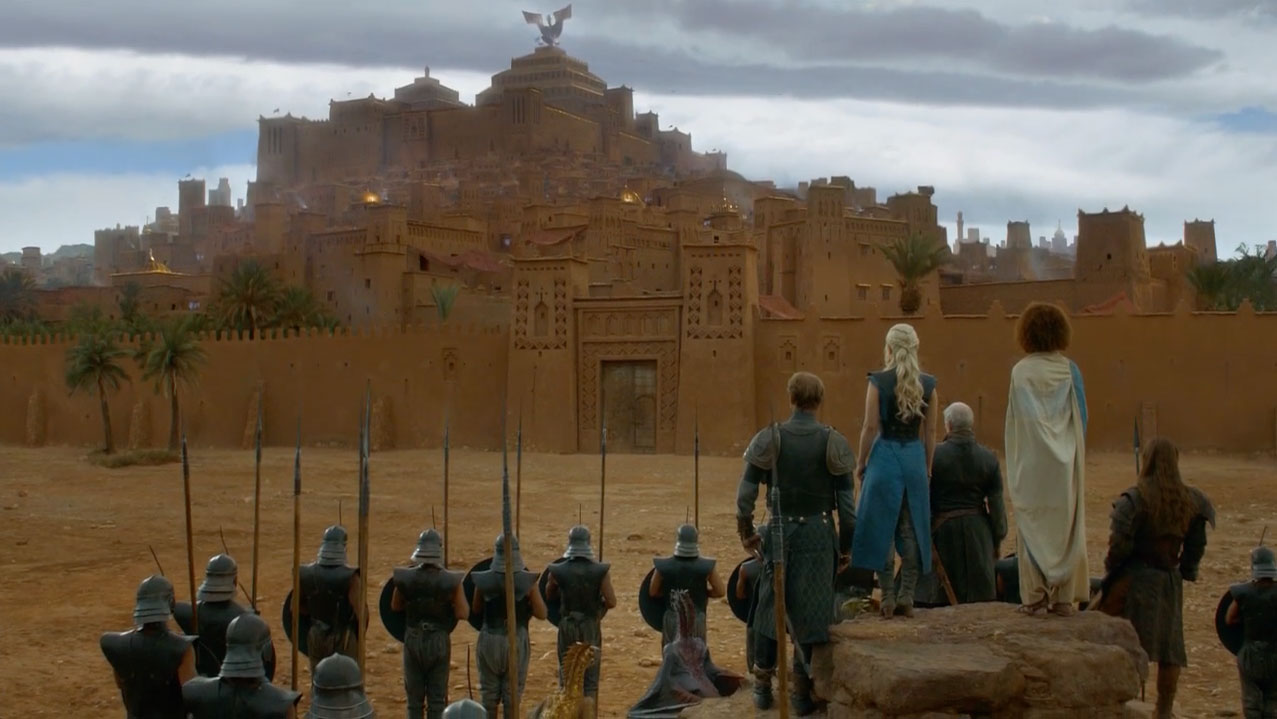
The drive to Marrakech was generally pleasant. We made a stop at Aït Benhaddou (a historic fortified village that is a UNESCO Heritage Site and where this scene of Game of Thrones was filmed):
We drove through the Tizi n’Tichka pass over the Atlas Mountains, which was a very beautiful but pretty stressful drive through a lot of windy mountainous roads.
By the time we made it to Marrakech, it was pretty late and we were hungry and tired and very happy to settle into our riad for the evening.
Day 6: Marrakech
We didn’t have too many things planned in Marrakech because we mostly just wanted to have a rest day to chill, relax by the pool, and wander the medina.
As with all of the places we’ve stayed in Morocco, we started the day off with a lovely rooftop breakfast, complete with way too much food and great views.
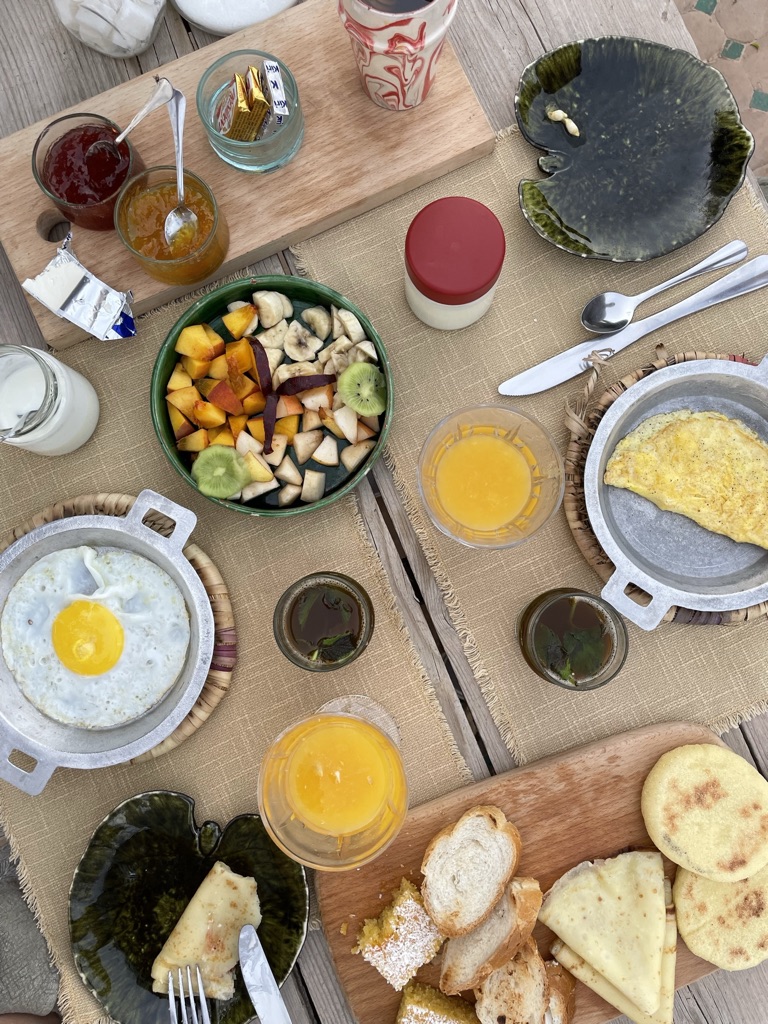
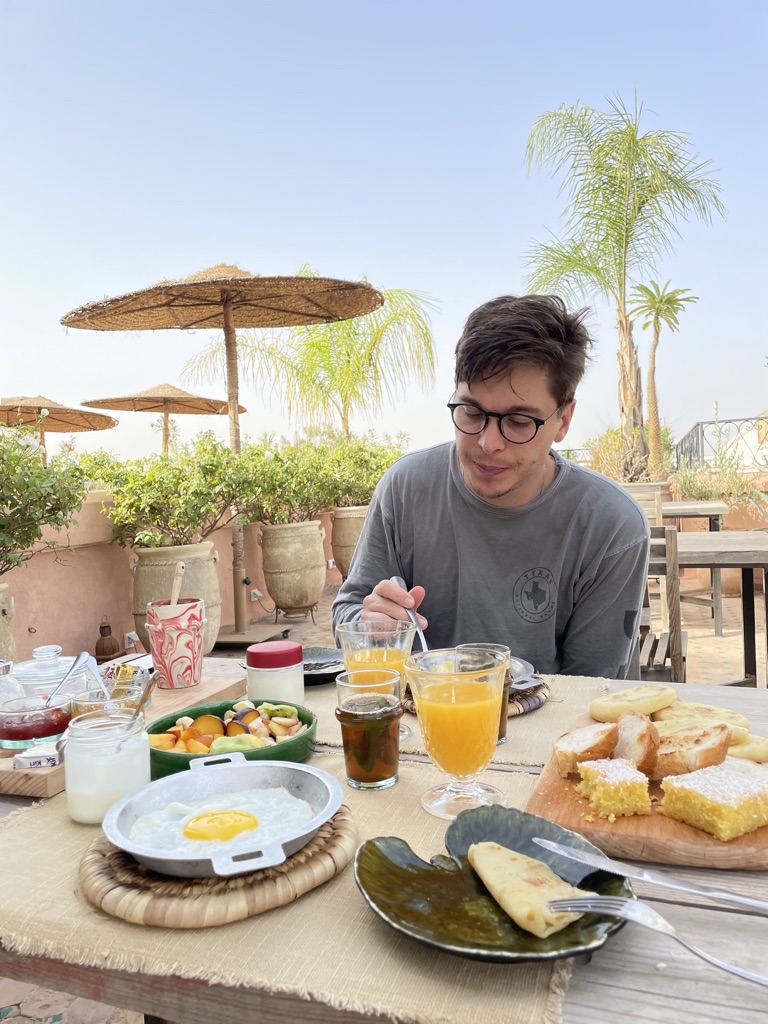
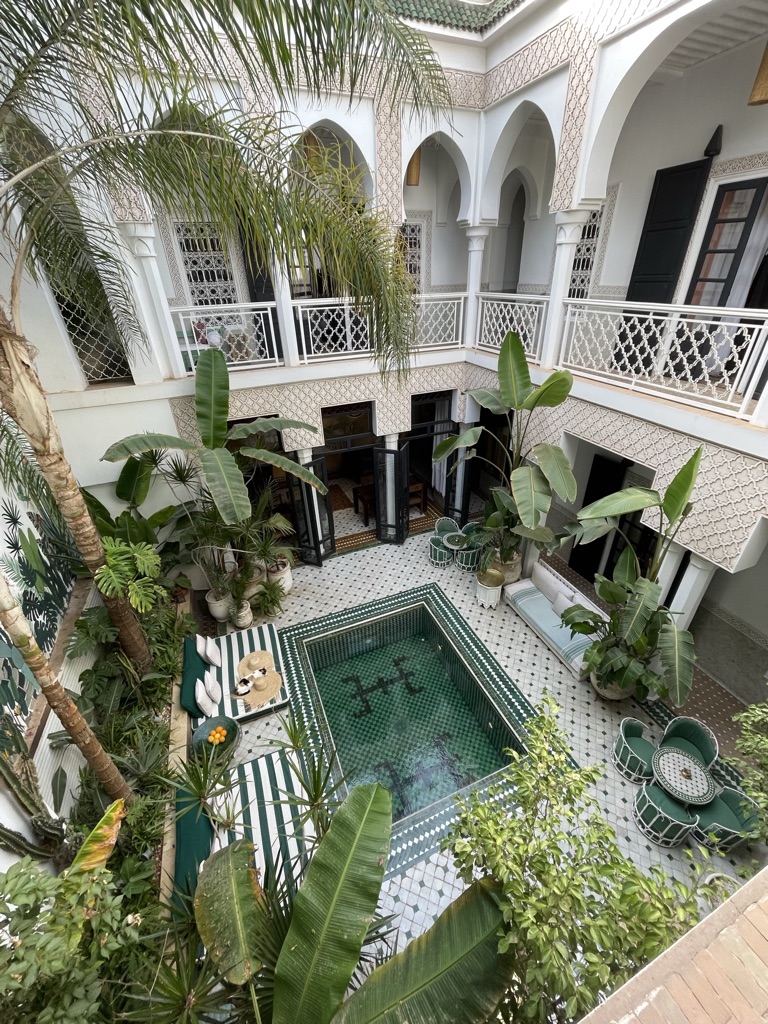
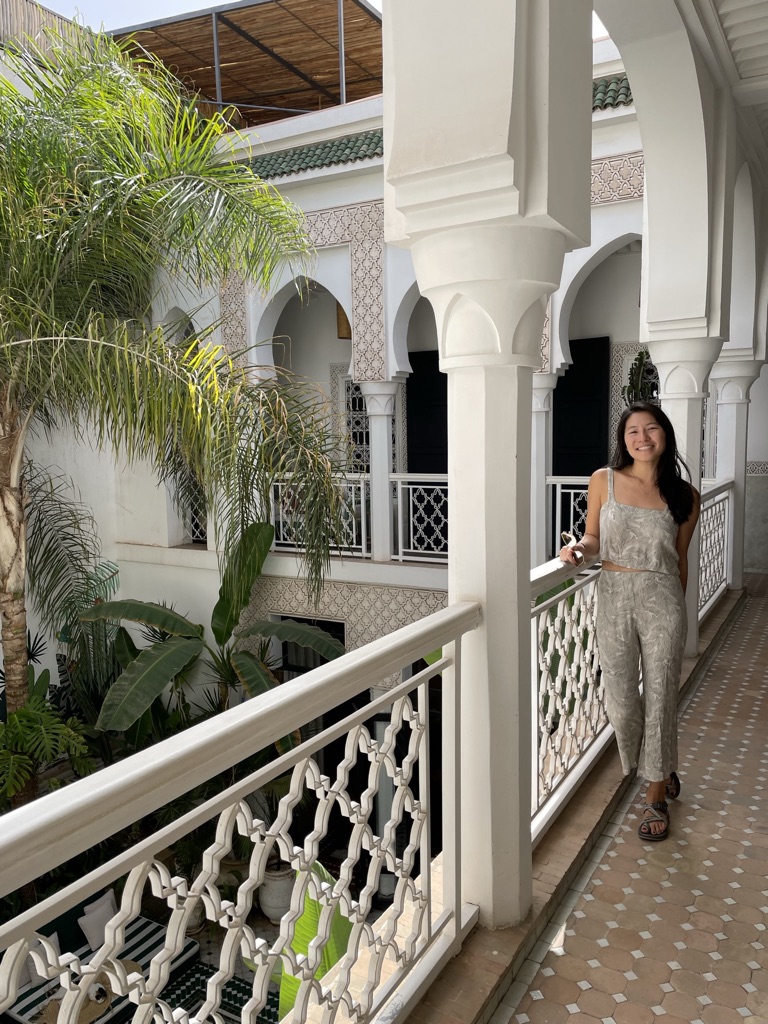
I had booked Riad Yasmine mostly because they kind of have a viral Instagram following and was pretty affordable. I think I got kind of lucky in booking it because someone had cancelled last minute and I just happened to see an opening – but usually they’re known to be fully booked out (and sometimes people will book out all 8 rooms in the riad for a special event or a yoga retreat).
It’s not surprising why Riad Yasmine is popular – it’s super cute and also comes with two adorable, sleepy cats:
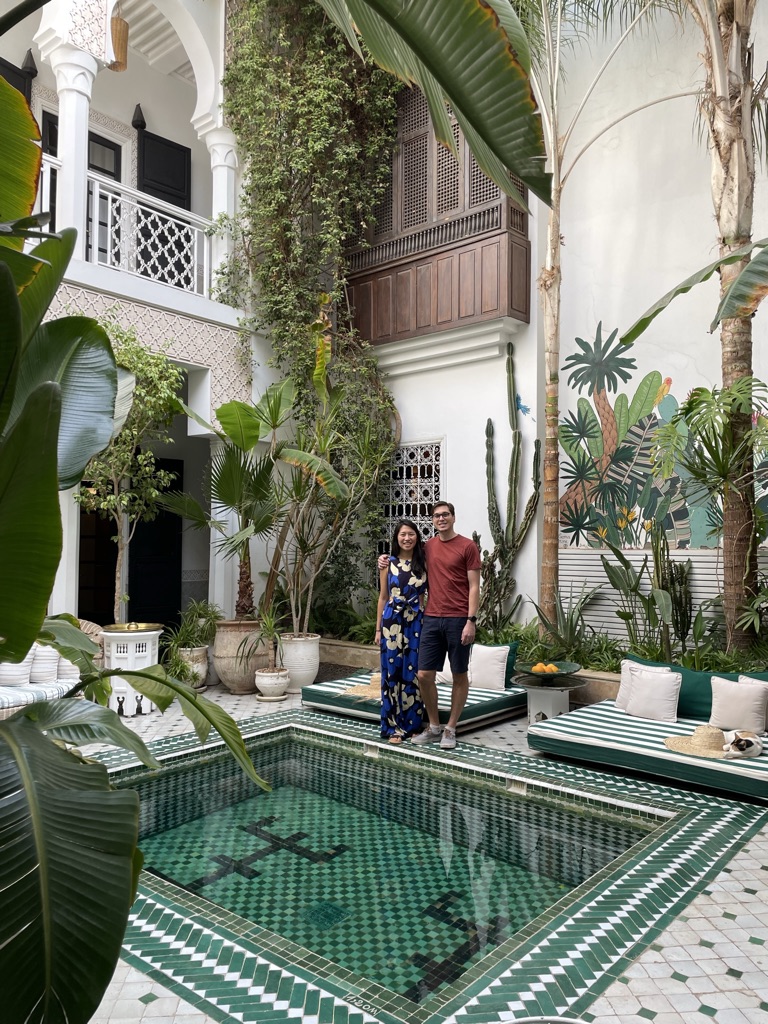
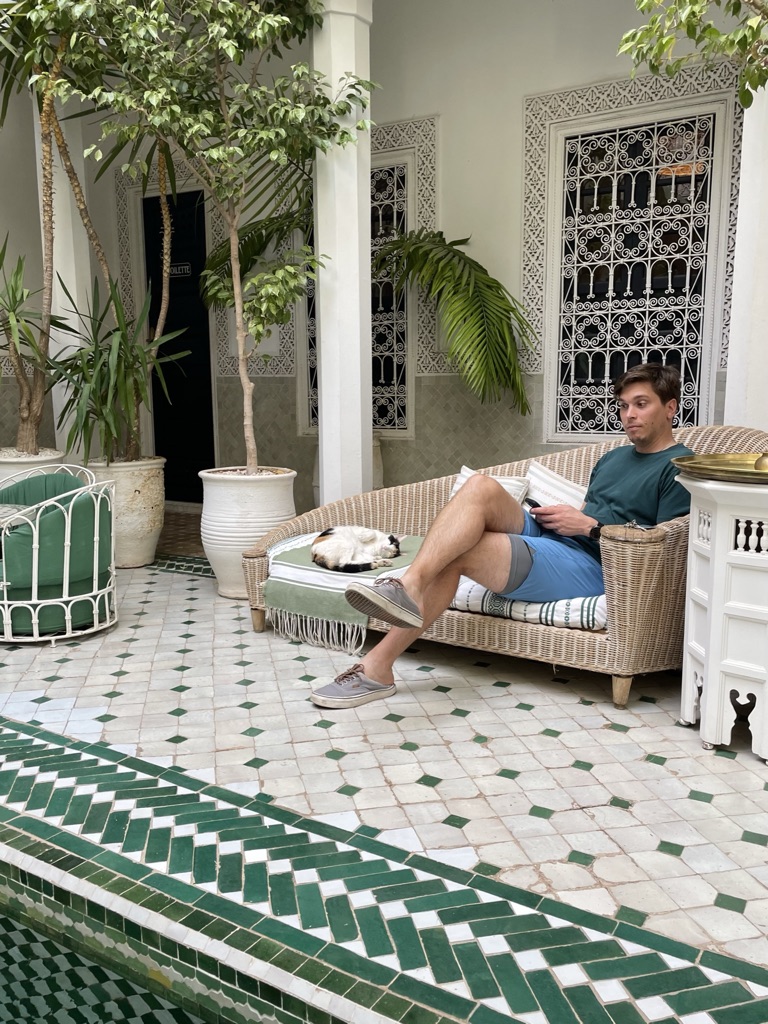
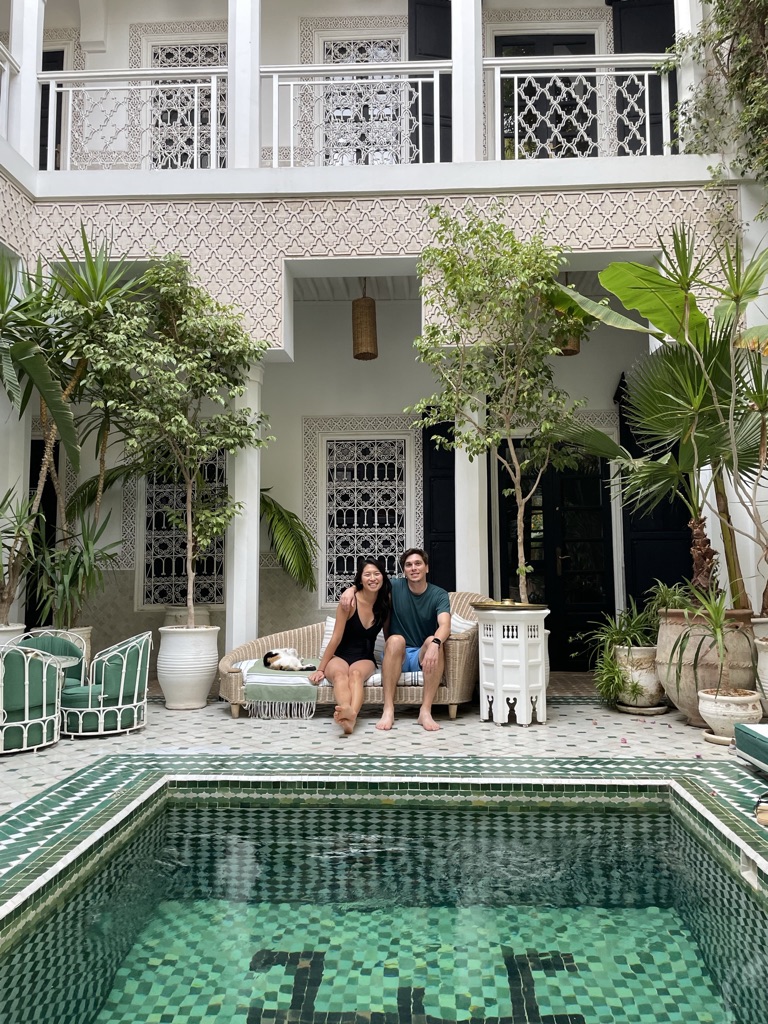
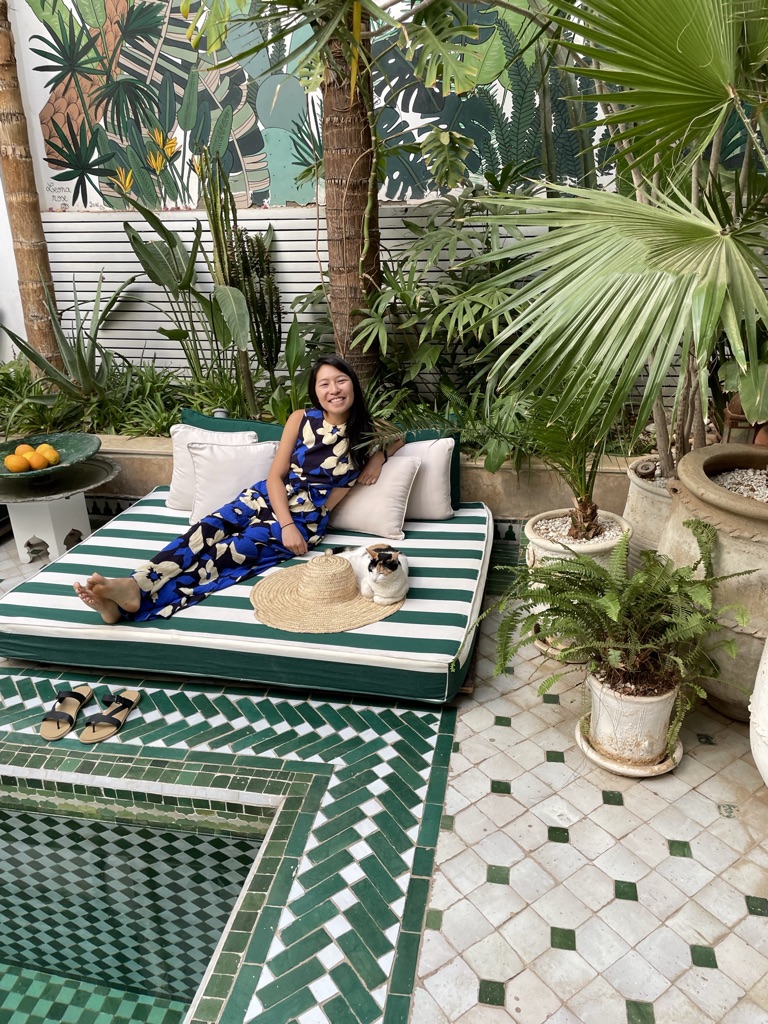
Almost everyone who visits Marrakech seems to go to Jardin Majorelle and Yves Saint Laurent Mansion – which indeed in pictures looks super cute with very Instagrammable blue walls and cool plants. We had a lazy morning and wandered over mid-morning, but after seeing the lines of tourists trying to get in, we just took a walk around the cafe and decided not to bother going in. We ended up wandering to an Asian restaurant called Spicy Asian Kitchen (which wasn’t particularly spicy and as far as we could tell served a random mixture of Thai, Vietnamese, and Chinese food), so the food was average at best but I think we were kind of excited to just get a bit of a change of scenery for our taste buds.
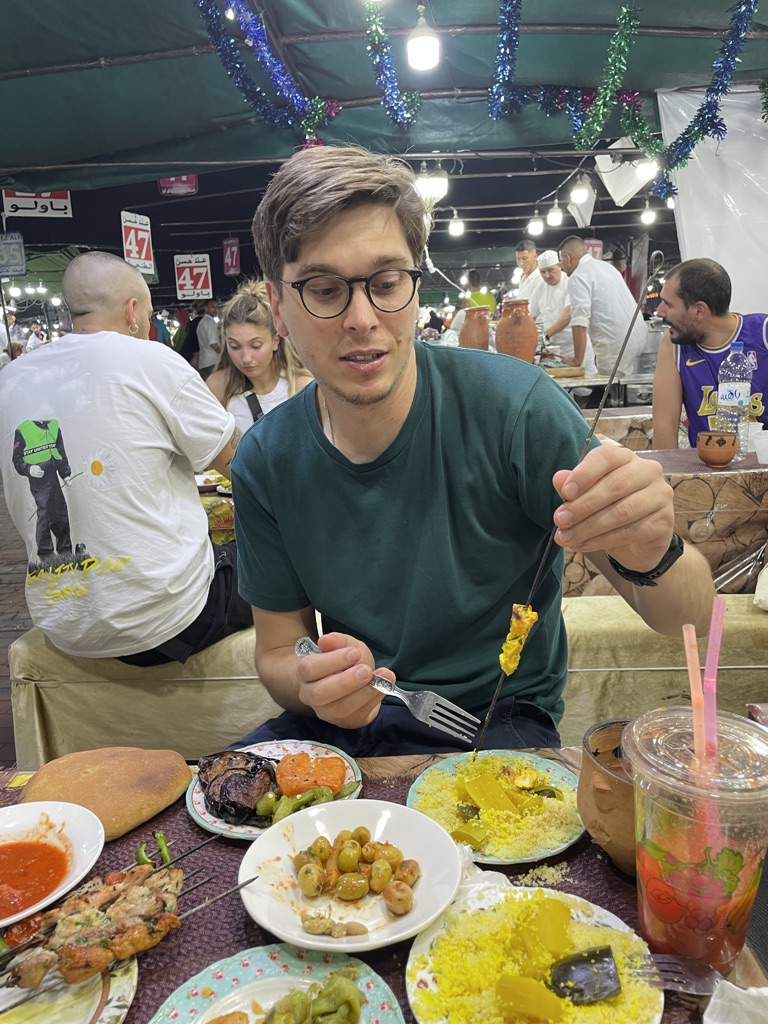
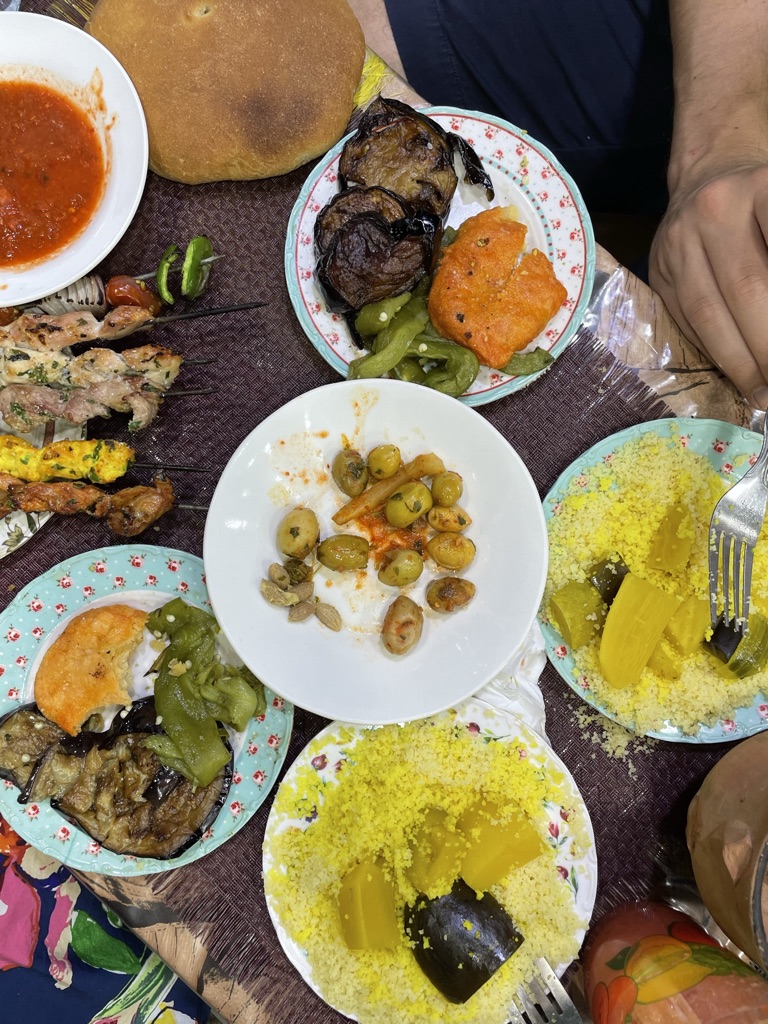
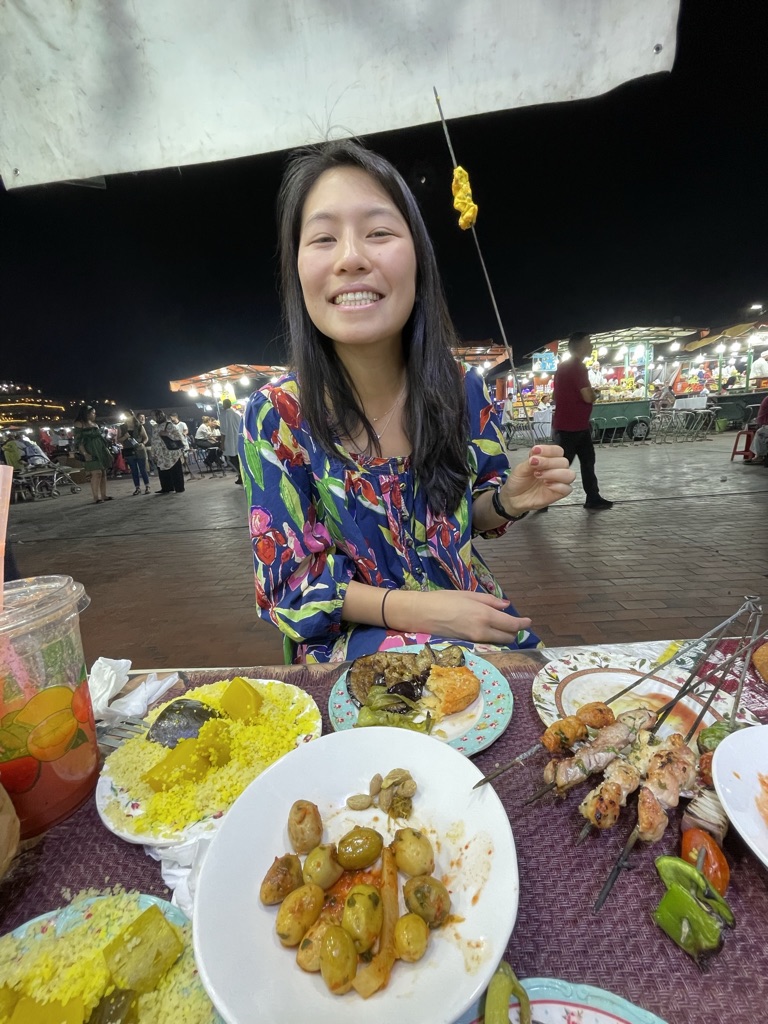
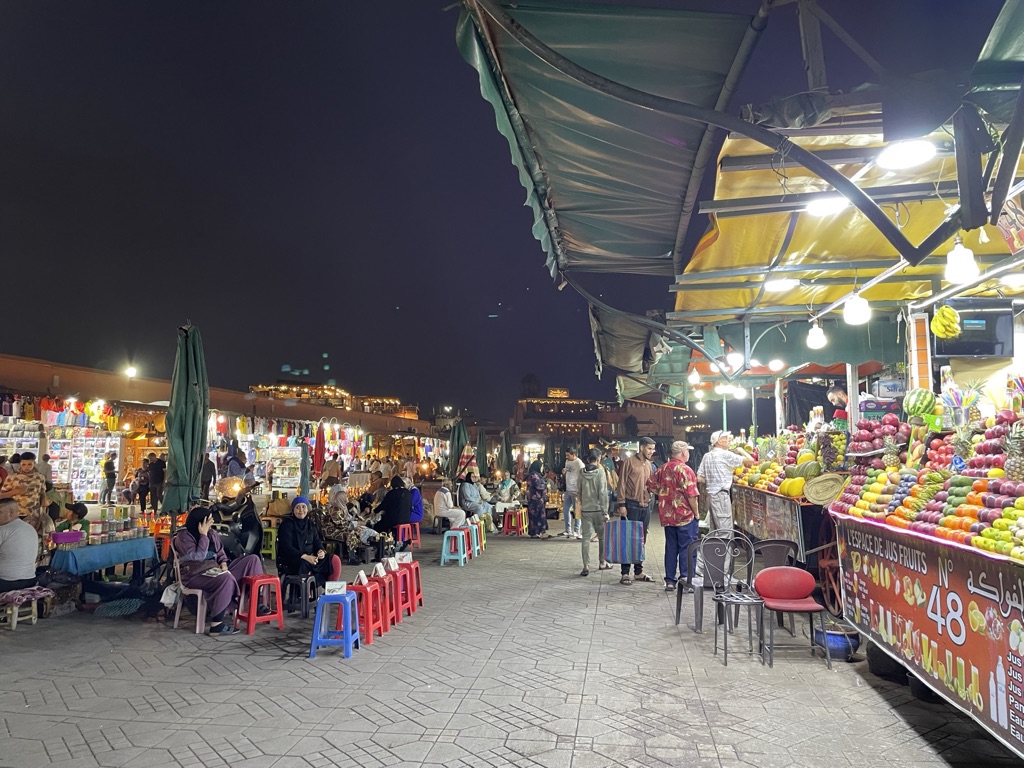
For dinner, we wandered over to Jemaa el-Fna, the main square of Marrakech’s old city and had a hodge podge meal of skewers, couscous, and other street food. As the sun was setting, the square lights up with all sorts of food stalls, vendors, and entertainers (allegedly there are lots of snake charmers, but we didn’t try too hard to seek them out).
I loved the hustle and bustle (and all the “salespeople” who would surround you to try to get you to eat at their food stall or buy something). We heard from friends who visited Morocco that they hated all the haggling and people trying to come up and sell you things, but I quite enjoyed it – it reminded me a lot of the night markets in China and India.
Day 7: Taghazout
The next morning, we set off for Taghazout, a fishing town on the coast of Morocco that is now well known as a surfing destination. We originally had looked into doing a week-long surf camp in Taghazout, but since we just didn’t have enough time to surf and do all the other things we wanted to do in Morocco, we ended up only staying in Taghazout for a few nights.
We stayed at Munga Guesthouse which had a really cool, fun, surfy/boho vibe, and of course, a great rooftop breakfast. The whole town has a very laid-back boho vibe, with shops, cafes, and houses built on the hill and cool, colorful alleyways leading down to the beach.
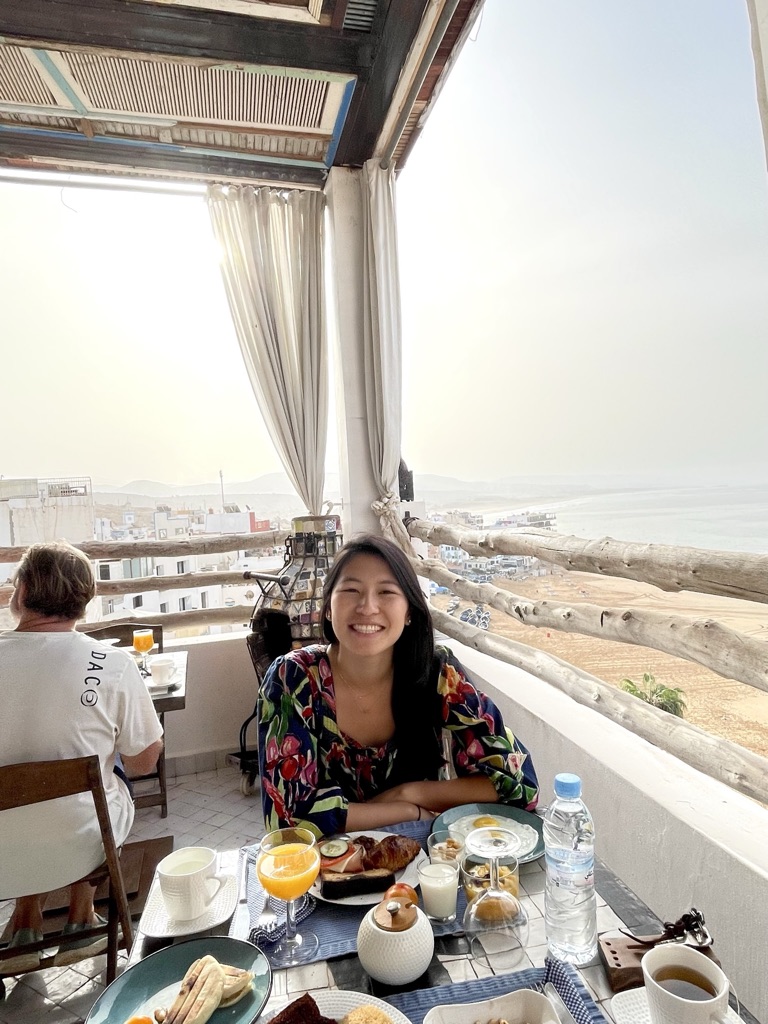
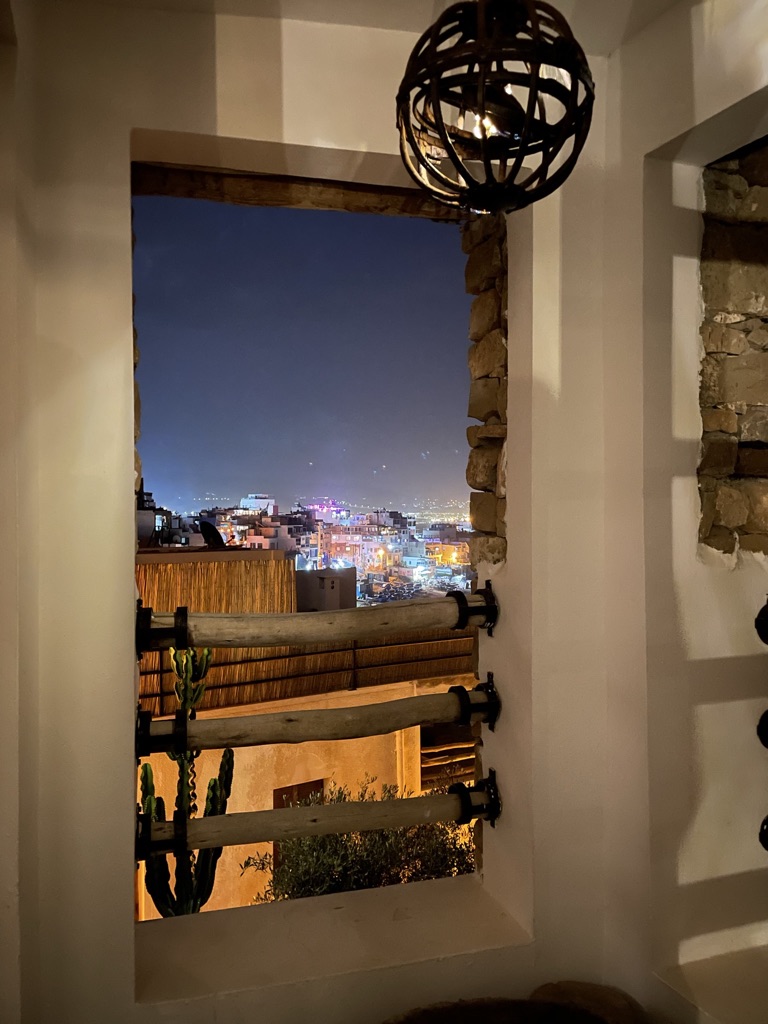
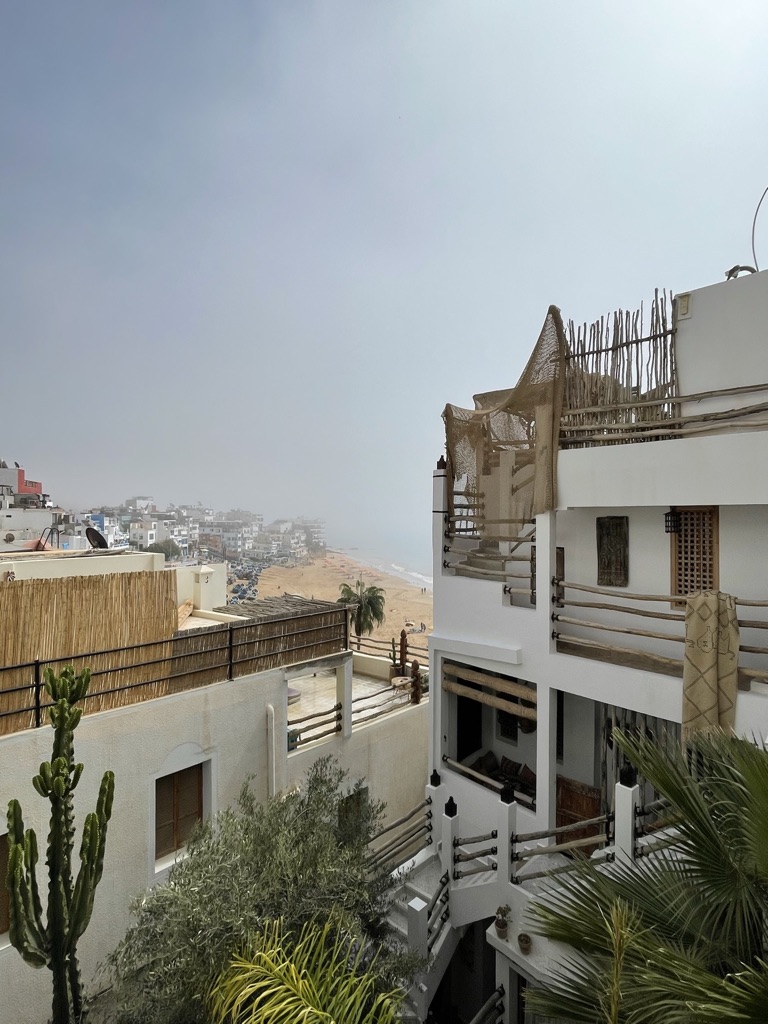
Day 8: Surfing in Taghazout
We spent the next day surfing and doing more wandering around the town. Our guide Rashid picked us up in the morning along with two other surfing students and we drove around the coast looking for good spots to surf.
This was basically Tedd’s and my first time surfing – I’d only gone once before in the Rockaways and the waves here were pretty intense, but we had a great time.

Starving after our morning of surfing, we had late afternoon lunch at one of the little beachside cafes, and wandered around the town some more.
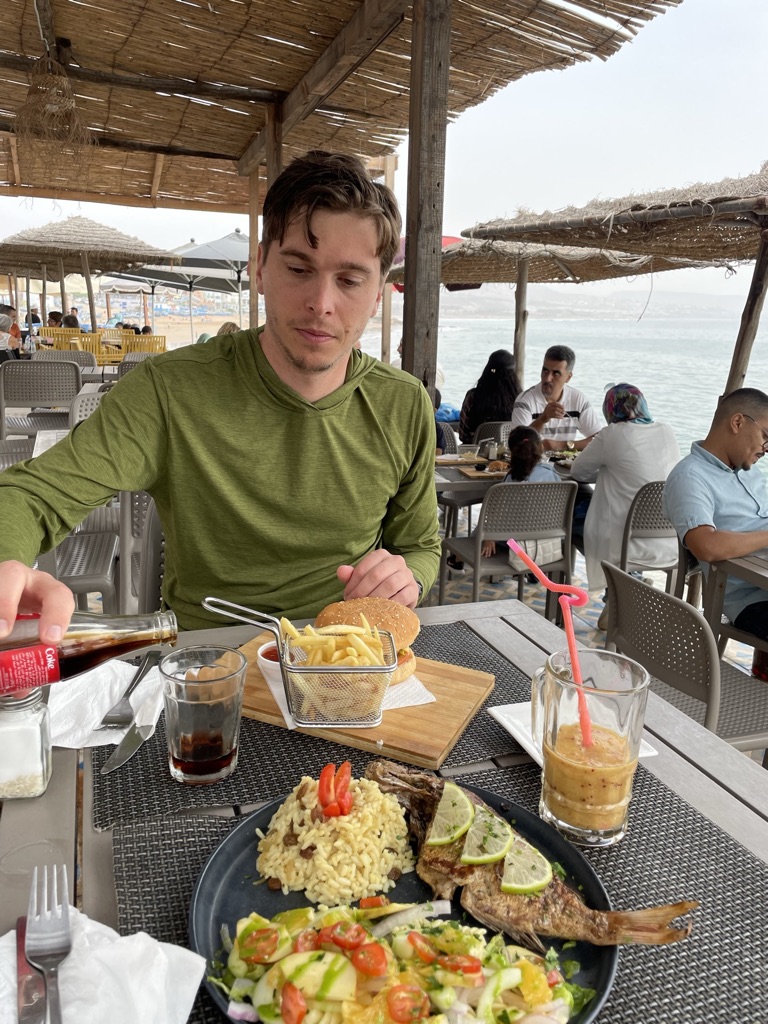
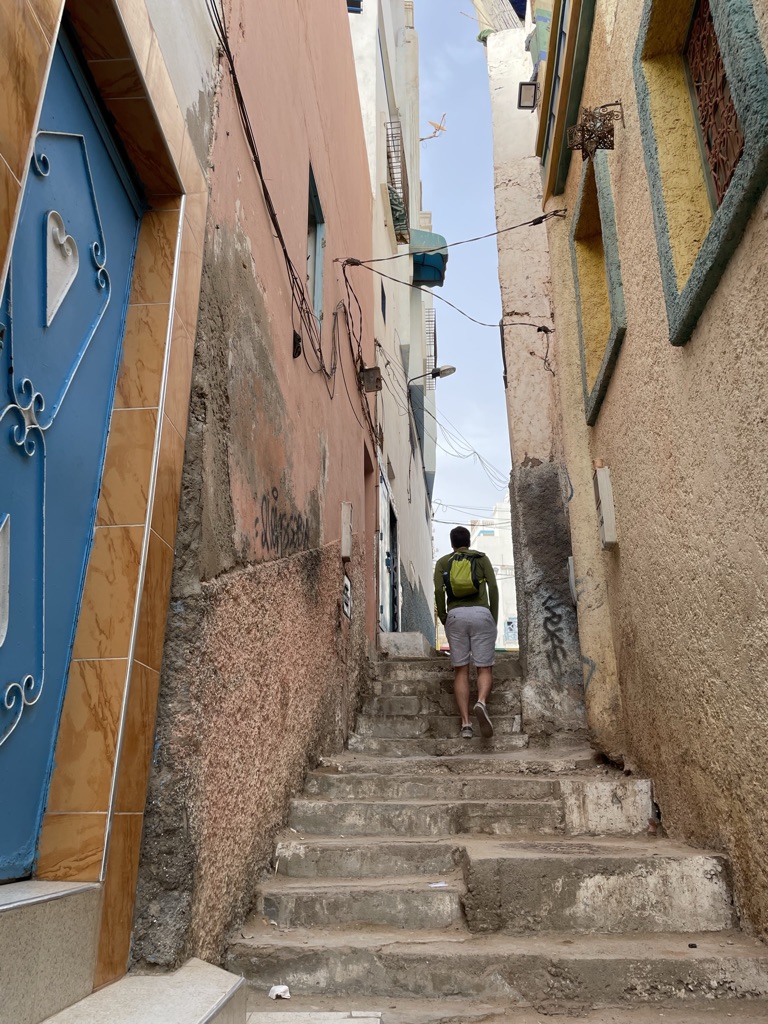
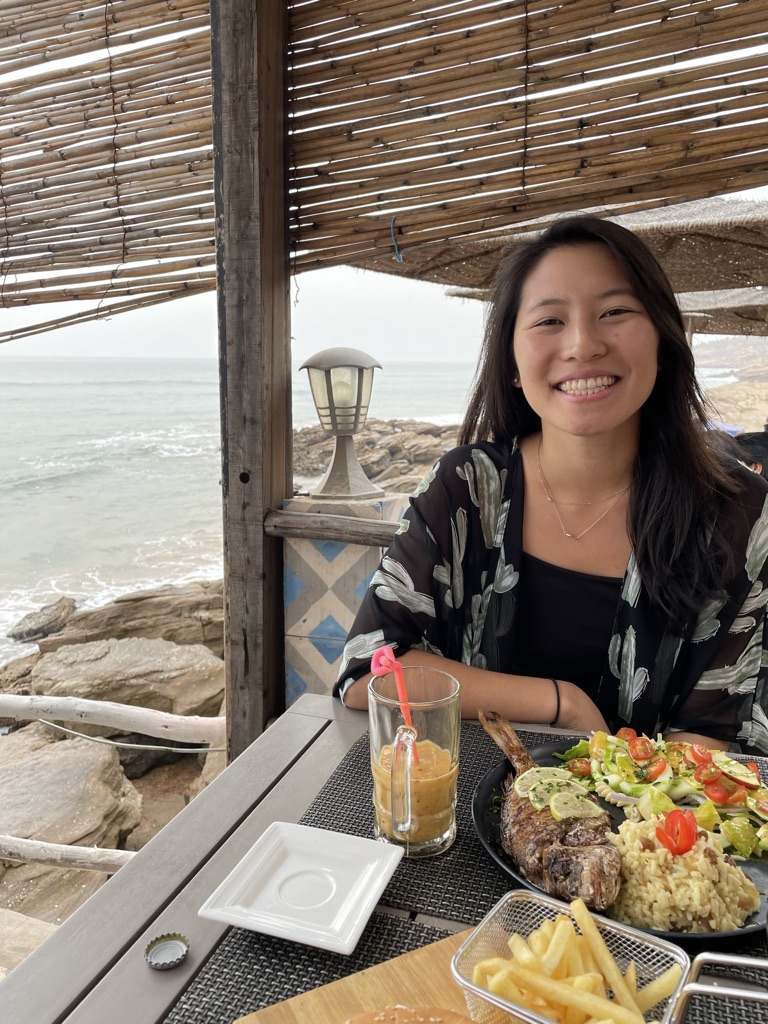
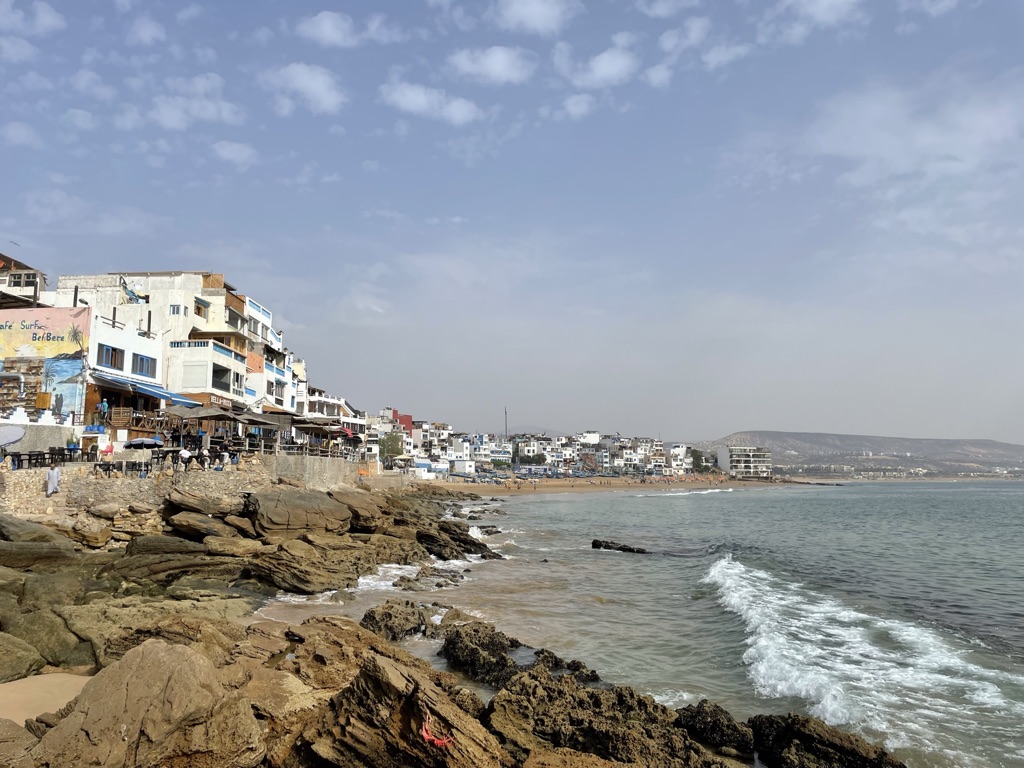
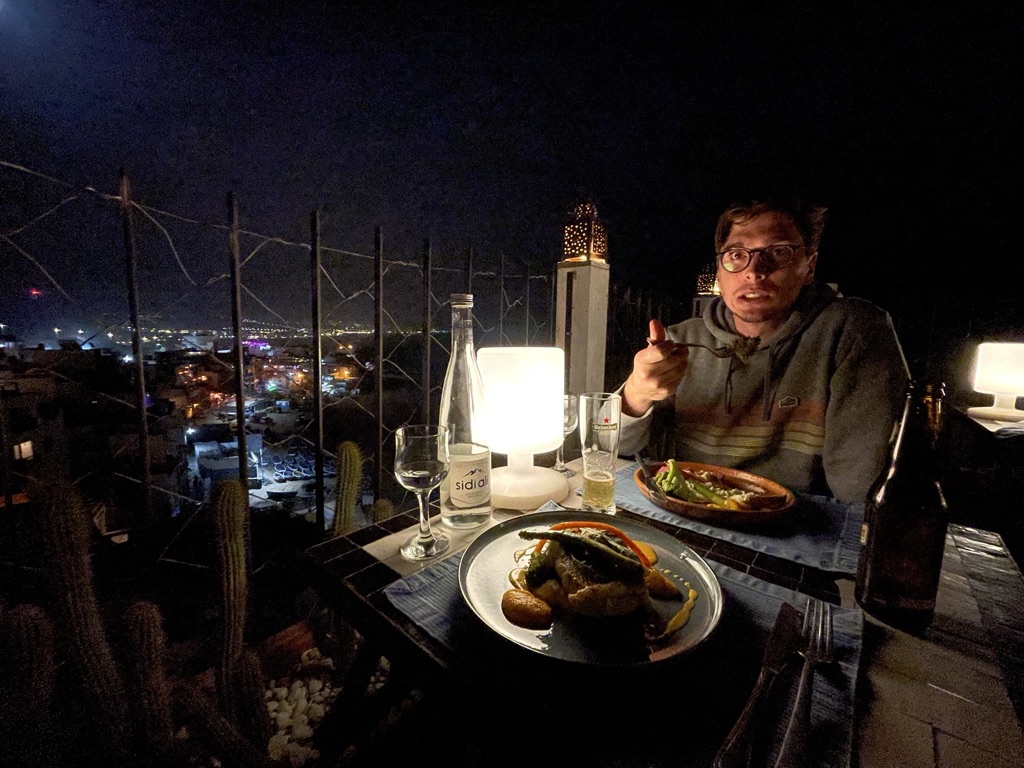
Munga Guesthouse seemed like a cool, hip hangout spot because at night, a bunch of the surfers around town would come to the bar/restaurant and hang out. It was pretty poppin! For our last night in Taghazout, we had dinner on the rooftop of Munga, and listened to an entire almost hour-long sermon by the town imam that was broadcast over the entire town during evening prayers.
Day 9: Casablanca
We woke up the next morning for an early flight to Casablanca. We had originally planned to drive back to Casablanca (after two 9-hour drive days out to the Sahara, the 5-hour drive to Casablanca seemed like a piece of cake, but alas, we were pretty tired of driving and wanted to be able to have a full day in Casablanca).
Before coming to Morocco, I had thought we would want to spend a few days in Casablanca (because I had such a cool, romantic image of the city because of the movie). But everyone told us that you really only need one day in Casablanca – and sure enough, though Casablanca had some really beautiful parts, it was for the most part just a really big, loud, and busy city.
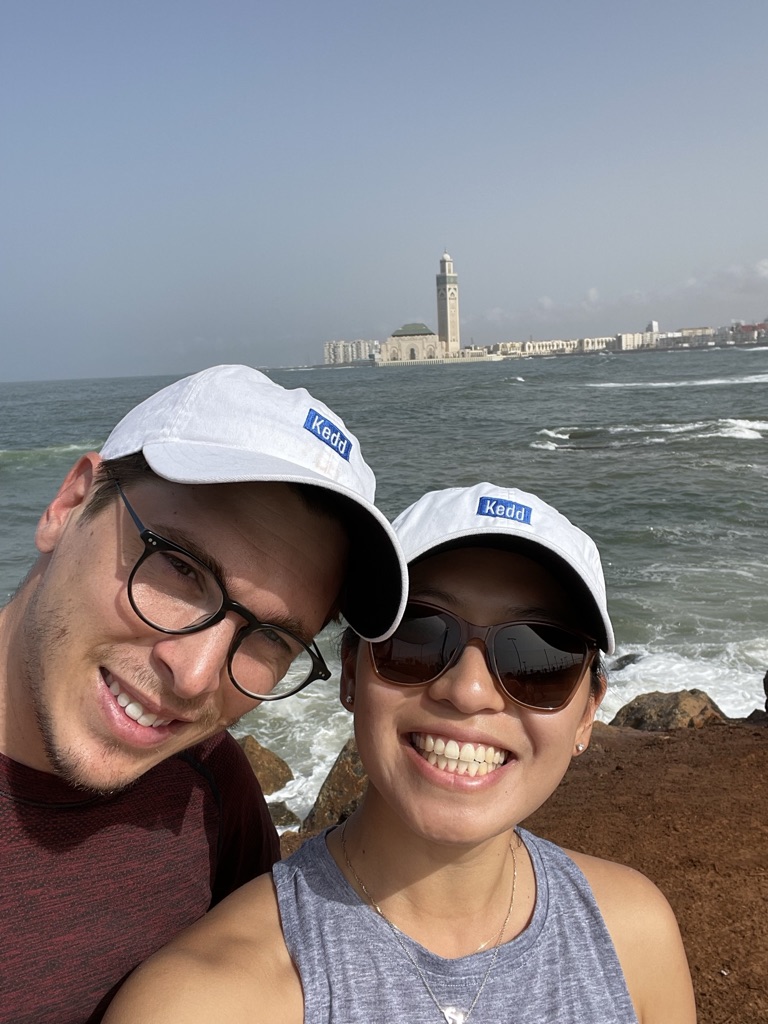
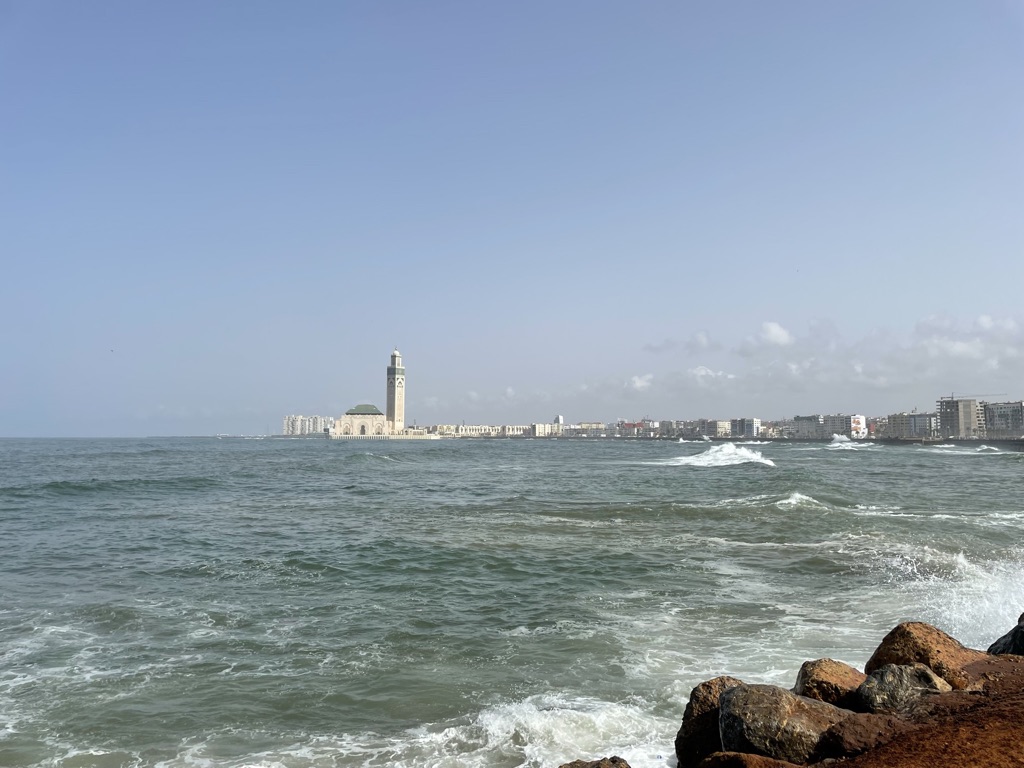
After arriving, we went for a run along the beach/corniche from the Four Seasons (where we were staying) to Hassan II Mosque, one of the main landmarks in Casablanca. We didn’t go inside because it was pretty busy and crowded, but it was really beautiful to see the mosque and surrounding beach on our run all along the corniche. We spent most of the rest of the afternoon at the pool and spa of the Four Seasons and had some much-needed relaxation time after a pretty active and exhausting vacation.

One of the things I love doing when traveling around the world is eat hot pot, not only because I love eating hot pot, but because it’s often interesting to see Chinese communities in cities around the world. I found a single hot pot restaurant in all of Morocco and it was in Casablanca, so of course we had to go for our last meal in Morocco.
Bambou Panda was in the main business district of Casablanca. Tedd and I had just finished listening to Snakehead (about the international network of underground Chinese smuggling operations) on our 20 hour drive across the last few days and we were excited to find out what might’ve brought Chinese immigrants to Morocco. Chatting with the restaurant owners, we found out that Huawei’s Africa headquarters were right down the block, so this hot pot restaurant was mostly catering to the Chinese Huawei employees and other tourists like us (and indeed, the menu was entirely in Chinese and this was one of the most expensive meals we had in Morocco, with prices basically on par with New York City).
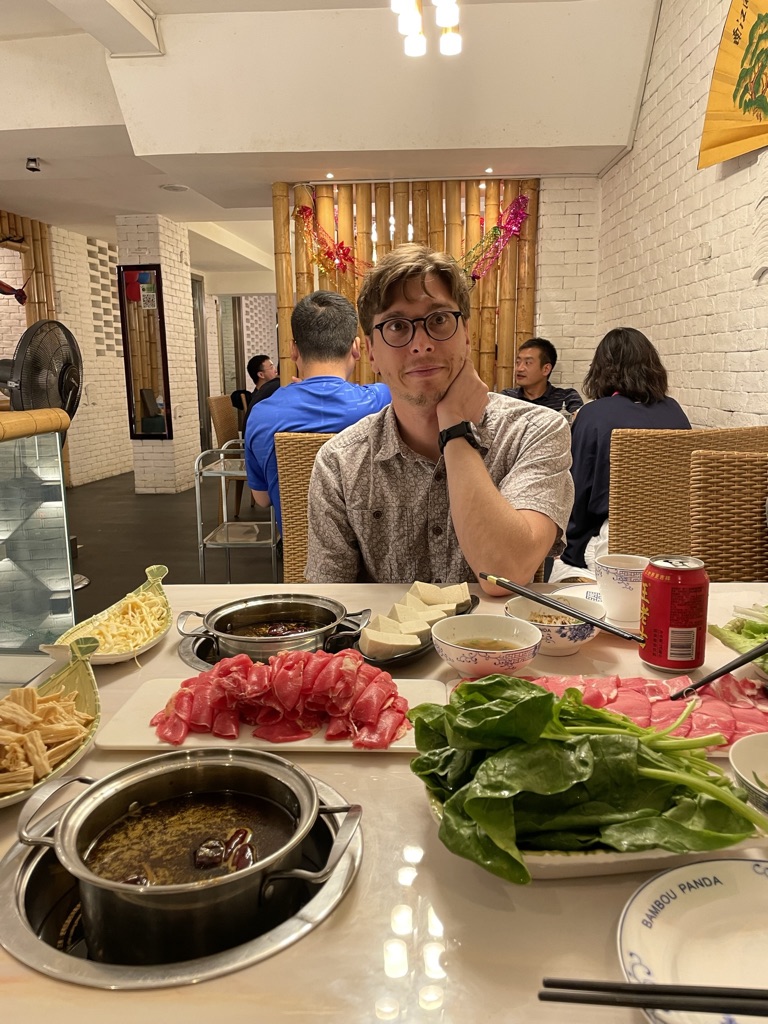
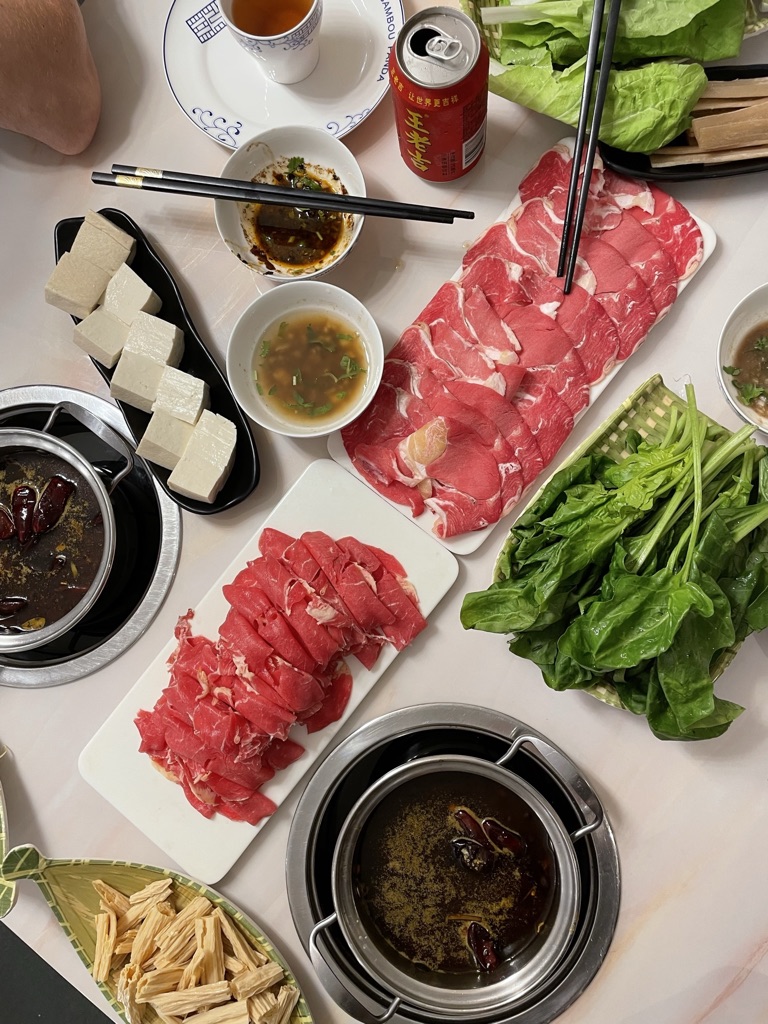
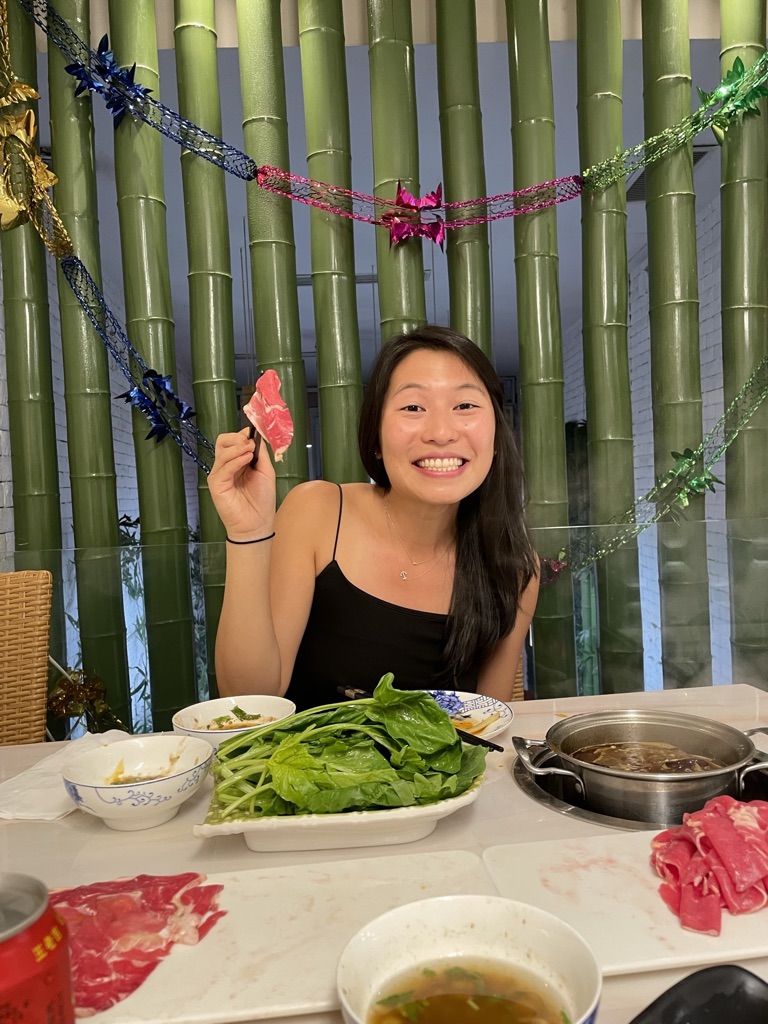
The other reason I love eating hot pot when I travel is that unlike other Chinese food, which can have a very wide range of quality and style around the world, hot pot is pretty consistent regardless of whether you’re in Germany or Colorado or Morocco.
One thing that was unique though, was that they had camel on the menu! At the insistence of our waiter (who convinced us by saying “you’re in Morocco, when else are you going to have camel in your hot pot!”), we tried some and it honestly kind of just tasted like lamb, but a little tougher.
Day 10: Goodbye!
After a leisurely breakfast at the Four Seasons, we said goodbye to Morocco and flew home back across the Atlantic.
Cheers to a very fun and memorable trip!
The Route
Drive times:
- Casablanca -> Fes: 4 hours
- Fes -> Merzouga: 8 hours
- Merzouga -> Tinghir: 3 hours
- Tinghir -> Marrakech: 6 hours
- Marrakech -> Taghazout: 3.5 hours
We did 20+ hours of driving over the course of a few days – a bit exhausting but the drive brought us through a lot of very different and very beautiful landscapes
Some notes on driving in Morocco:
- Road/highway infrastructure – though some were better than others, the highway infrastructure in Morocco was overall pretty good. Most of the highways were well paved between the big cities, there were just a few mountain passes with one-lane highways (particularly the section through the Atlas Mountains that were a tad annoying)
- Driving in the cities – other than just driving to our lodging, we really didn’t try to drive in any of the cities, and for good reason. Like a lot of city driving, it involved a lot of navigating around people, motorbikes, and even donkeys. Google Maps can also be somewhat unreliable, as it once gave us directions to drive straight through the busiest part of the medina and we ended up basically getting stuck on a very busy market street that was very much not meant for cars (the handful of other cars that also got stuck like us were also tourists who were probably also following Google Maps)
- Police checkpoints – every few hours and particularly near the cities there were police checkpoints. For the most part, we just had to stop and the officers just waved us through (we’ve heard of some tourists getting stopped by the police and having to pay a fine or a bribe, but we never had any issues)
- Gas and rest stops – gas stations were pretty plentiful, but just a note that especially in some of the more rural parts of the country, there aren’t always restrooms at the gas stations. I really had to go to the bathroom and ended up having to walk around looking for a cafe to use the restroom because the gas station didn’t have one
- Rental cars – most large rental car companies (Hertz, Avis, Budget) had a presence at the major airports. We originally booked with a smaller rental car agency and when we showed up at the Casablanca Airport, they only had manual transmissions cars. I couldn’t drive manual so we just walked next door to the Avis and they had automatic cars available